
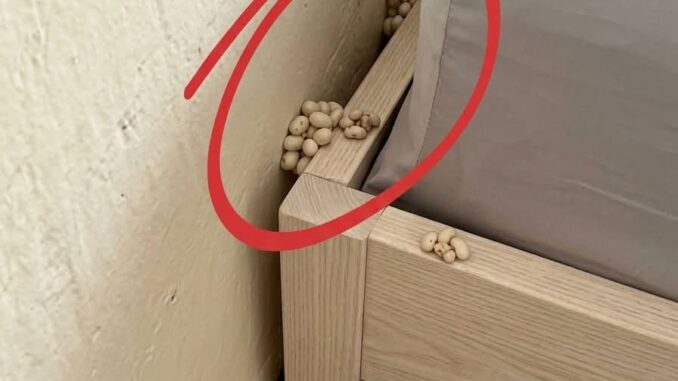
Returning home exhausted after a long day only to discover strange, egg-like white clusters near your bed is enough to send anyone’s anxiety soaring. When exhaustion meets the unknown, imagination quickly jumps to the worst-case scenario: a hidden pest infestation or an uninvited creature making a home where you sleep.
However, unusual discoveries in the bedroom do not automatically signal a disaster. Understanding what these clusters could be, how to safely inspect them, and when to seek professional help can turn a frightening moment into a manageable situation.
1. What Could Those Small White Clusters Be?
Small, pale, or white spherical clusters found near baseboards, bed frames, or furniture can originate from a variety of sources—some biological, others entirely environmental.
┌─────────────────────────────────────────────────────────────┐
│                 Common Potential Identifiers                │
├──────────────────────────────┬──────────────────────────────┤
│ Category                     │ Likely Culprits / Sources    │
├──────────────────────────────┼──────────────────────────────┤
│ Common Household Pests       │ • Spider egg sacs            │
│                              │ • Carpet beetle pupae/eggs   │
│                              │ • Termite frass (pale pellet)│
│                              │ • Bed bug egg clusters       │
├──────────────────────────────┼──────────────────────────────┤
│ Inanimate / Harmless Material│ • Desiccant silica beads     │
│                              │ • Styrofoam or beanbag fill  │
│                              │ • Mold/fungal growth spot    │
│                              │ • Plant fertilizer beads     │
└──────────────────────────────┴──────────────────────────────┘
-
Insect Egg Sacs or Pupae: Spiders often build silken sacs in dark corners near floorboards, while carpet beetles leave behind small, pale pupal cases in undisturbed areas.
-
Termite Frass: Drywood termites push tiny, oval pellets out of kick-out holes. In certain lighting, light-colored frass can resemble tiny clustered eggs.
-
Inanimate Household Debris: Tiny white foam beads from an aging pillow, beanbag, or stuffed animal can easily drift under a bed frame and collect in static-charged clusters along baseboards.
-
Silica Gel or Desiccant Beads: Small translucent or white beads from shoeboxes or new clothing packaging can spill, roll across hard flooring, and collect in dark corners.
2. Step-by-Step Response Protocol
Before panicking or reaching for an aerosol bug spray, follow a systematic approach to safely evaluate the situation.
┌─────────────────────────────────────────────────────────────┐
│                 Immediate Action Protocol                   │
├─────────────────────────────────────────────────────────────┤
│ Step 1: Pause & Do Not Disturb                              │
│ • Avoid crushing, vacuuming, or wiping the clusters before  │
│   identifying them, as this can spread spores or pests.     │
│                                                             │
│ Step 2: High-Resolution Photo Inspection                    │
│ • Use a flashlight and zoom in with a camera to capture     │
│   clear details of texture, shape, and attachment points.   │
│                                                             │
│ Step 3: Inspect Surrounding Areas                           │
│ • Check nearby mattress seams, behind headboards, and under │
│   nearby rugs for secondary signs or live movement.         │
│                                                             │
│ Step 4: Safely Collect a Sample (If Necessary)             │
│ • Use clear adhesive tape or a sealable plastic bag to pick │
│   up a small sample without direct hand contact.            │
└─────────────────────────────────────────────────────────────┘
3. Comparing Causes: Pests vs. Harmless Debris
Determining whether you are dealing with a live biological issue or harmless household debris comes down to examining key physical characteristics:
4. When to Call a Professional
While many household discoveries turn out to be harmless debris or minor spider webs, certain red flags warrant contacting a licensed pest control specialist:
-
Evidence of Active Movement: Seeing tiny insects emerging from or crawling near the clusters.
-
Structural Wood Damage: Finding small pinholes in nearby wood trim, baseboards, or bed legs accompanied by fine dust.
-
Bites or Allergic Reactions: Waking up with unexplained skin irritation or itchy red marks.
-
Widespread Recurrence: Cleaning the area thoroughly only to find identical clusters reappearing in the same spots days later.
Summary
Discovering unknown objects beside your bed late at night naturally triggers a stress response. By following a simple rule—stop, observe, and identify before assuming—you can separate temporary panic from practical reality and take the right steps to ensure your bedroom remains a safe, comfortable sanctuary.
Leave a Reply