
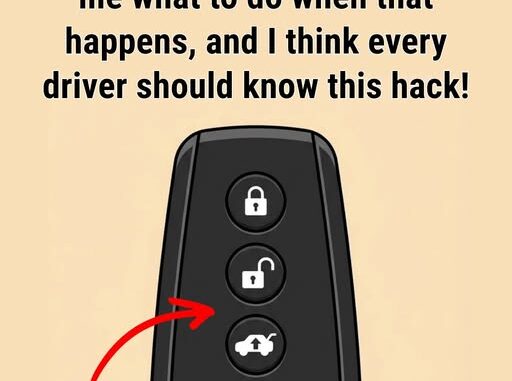
A key fob makes everyday driving incredibly convenient. With the push of a button, you can often lock or unlock your vehicle without even taking the key out of your pocket.
But what happens when you press the button and absolutely nothing happens?
Before assuming there’s a serious problem with your car, there are several simple things you can check. A weak battery, a temporary communication issue, or even a forgotten mechanical key may be all that’s standing between you and your vehicle.
Here are some practical steps to try.
1. Look for the Hidden Mechanical Key
Many modern key fobs contain a small traditional key inside the housing.
Manufacturers commonly include this as a backup in case the electronic portion of the fob stops working. Look for a small release button, switch, or latch on the fob.
Once released, the mechanical key can usually be used to unlock the driver’s door manually.
The exact design varies between vehicles, so if you’re unsure how yours works, check the vehicle owner’s manual.
2. Check Whether Your Vehicle Has a Backup Starting Procedure
Getting inside the vehicle is only part of the problem. If the fob isn’t communicating normally with the car, you may also need an alternative way to start the vehicle.
Some vehicles equipped with push-button ignition have a backup detection method that allows the car to recognize the key fob even when its battery is weak or depleted.
Depending on the manufacturer, this may involve placing the fob in a designated location or holding it near a specific area of the vehicle.
There is no universal procedure, so it’s best to follow the instructions provided for your particular model.
3. Replace the Key Fob Battery
One of the most common reasons a key fob becomes unreliable is a depleted battery.
Many fobs use small coin-style batteries, but the correct battery number depends on the specific model. Before purchasing a replacement, check the existing battery or consult the owner’s manual.
When replacing it, pay attention to the orientation of the battery and make sure the replacement is seated properly.
Afterward, test the buttons from several distances to make sure the fob is functioning normally.
4. Keep a Backup Method Available
Some newer vehicles offer smartphone applications or digital-key features that can provide additional ways to access or operate the vehicle.
However, these features aren’t available on every car and may require setup before you actually need them.
If your vehicle supports a manufacturer’s mobile app or digital key, setting it up ahead of time can give you another option if the physical fob becomes unavailable.
It’s also worth knowing where your spare key is kept rather than discovering its location during an emergency.
5. Check for Other Possible Causes
A dead fob battery isn’t always the explanation.
If replacing the battery doesn’t solve the problem, the fob itself could have been damaged, the vehicle’s receiver may not be responding normally, or another issue could be preventing communication.
Try the spare key, if you have one.
If the spare works normally, the original fob may need attention. If neither key works, the issue could be related to the vehicle rather than the fob.
Avoid repeatedly forcing buttons, opening the fob unnecessarily, or attempting electrical repairs unless you know what you’re doing.
6. Get Assistance If You Need It
If you’re unable to access or start your vehicle, roadside assistance may be able to help.
Your automobile insurer, vehicle manufacturer, membership organization, or another service provider may offer roadside assistance depending on your coverage.
If the key fob has been damaged or needs programming, a qualified automotive locksmith or dealership may also be able to diagnose the problem and provide the appropriate replacement or service.
A Little Preparation Can Save a Lot of Trouble
A key fob problem is much easier to handle when you already know what your vehicle’s backup options are.
Take a few minutes to find the mechanical key, check which battery your fob uses, locate your spare key, and read the relevant section of your owner’s manual.
It’s a small amount of preparation that can make an unexpected problem considerably less stressful.
Most importantly, remember that key fobs differ from one vehicle to another. A procedure that works for one model may not work for another, so your manufacturer’s instructions should always take priority.
The next time your key fob stops responding, don’t panic. Start with the simple possibilities, use the vehicle’s built-in backup options, and seek professional assistance if the problem continues.
Leave a Reply