

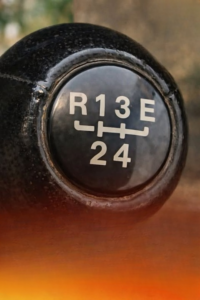
For many drivers, gear stick labels are familiar and straightforward, usually showing options like Park (P), Reverse (R), Neutral (N), and Drive (D). However, some older vehicles—and a few specific models—also include an “E” setting, which can cause confusion for those unfamiliar with its purpose.
Understanding the Purpose of the ‘E’ Setting
In earlier automatic transmission vehicles, the letter “E” was commonly used to indicate an economy-oriented driving mode. When selected, this setting was designed to adjust engine behavior in a way that supported more efficient fuel usage.
Rather than focusing on quick acceleration or higher performance, the system would prioritize smoother operation and lower engine strain during normal driving conditions.
How the ‘E’ Mode Was Used
The economy setting was typically used during steady driving, such as city cruising or highway travel. It helped the vehicle maintain lower engine revs where possible, which could contribute to reduced fuel consumption under certain conditions.
This feature was especially relevant in older vehicles before modern engine management systems became widely available.
Why the Feature Is Less Common Today
As automotive technology developed, dedicated economy gear settings became less necessary. Modern vehicles now use computerized systems that automatically manage fuel efficiency based on driving style, speed, and road conditions.
Advancements in transmission design and engine control systems allow efficiency adjustments to happen continuously in the background, without requiring a separate manual setting.
Because of this, the standalone “E” mode has largely disappeared from newer vehicles.
The Role of Driving Modes in Modern Cars
Today, many vehicles use selectable driving modes such as Eco, Normal, and Sport. In this context, an “Eco” or energy-efficient mode often serves a similar purpose to the older “E” setting, but with more refined electronic control.
Instead of relying on a single fixed setting, modern systems adjust multiple performance factors automatically to balance efficiency and drivability.
The ‘E’ in Electric Vehicles
In electric vehicles, driving modes may also include an “E” or eco-style setting, but the meaning is slightly different. Here, it typically refers to an energy-saving mode designed to optimize battery usage and extend driving range.
Since electric vehicles operate differently from traditional engines, these settings focus more on power management and efficiency rather than fuel consumption.
A Symbol of Changing Automotive Technology
Over time, the “E” has come to represent the broader evolution of vehicle technology. What once referred to a manual fuel-saving option has shifted toward automated efficiency systems and modern electric driving modes.
This reflects the automotive industry’s continued focus on improving energy efficiency, reducing emissions, and enhancing overall driving convenience.
Final Thoughts
The “E” on a gear stick is a reminder of how vehicle technology has changed over the years. While it once required drivers to manually choose an economy mode, today’s systems handle efficiency automatically in the background.
Understanding these markings helps drivers appreciate both older vehicle designs and the advanced technologies used in modern cars, where efficiency and performance are now balanced through intelligent systems rather than manual selection.
Leave a Reply