
-
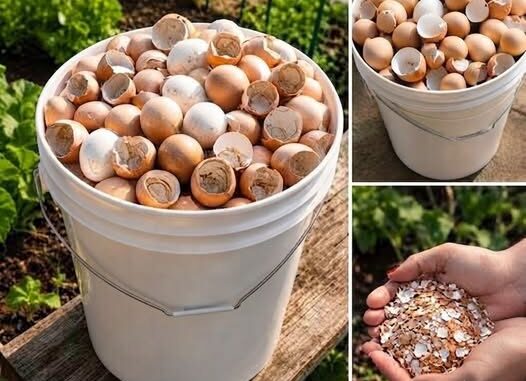
Eggshells usually have a short journey: crack the egg, cook breakfast, and toss the shell into the trash. But those leftover shells can actually have several useful second lives.
Because eggshells are primarily composed of calcium carbonate, they contain a mineral-rich structure that can be reused in composting, gardening, crafts, and certain household projects. However, their benefits are sometimes exaggerated online. The smartest approach is to focus on practical uses, handle shells properly, and understand their limitations.
Add Eggshells to Compost
One of the easiest ways to reuse eggshells is by adding them to a compost pile or bin.
Rinse away leftover egg material, allow the shells to dry thoroughly, and crush them before adding them to the compost. Smaller pieces provide more surface area and can gradually break down more easily.
Eggshells contribute mineral material to compost, but they aren’t a quick fertilizer. They decompose slowly, so gardeners shouldn’t expect an immediate change in soil conditions.
Think of them as one small component of a larger composting system rather than a miracle soil treatment.
Use Crushed Shells in the Garden
Gardeners sometimes crush eggshells and incorporate them into garden soil.
Since eggshells contain calcium carbonate, they can contribute calcium as they gradually break down. However, simply adding shells isn’t guaranteed to solve a plant problem.
For example, gardeners often associate eggshells with preventing blossom-end rot in tomatoes and peppers. But blossom-end rot can be strongly associated with inconsistent water availability and the plant’s ability to transport calcium. Adding more calcium isn’t necessarily the answer if the soil already contains sufficient amounts.
A soil test can provide much better information about what your garden actually needs.
Consistent watering and good growing practices are generally more useful than scattering large pieces of shell around plants and expecting immediate results.
Start Seeds in Eggshells
Eggshells can also become miniature seed-starting containers.
After cleaning the shells, make a small opening in the bottom for drainage. Place the shell in an egg carton for stability, add an appropriate seed-starting mixture, and plant the seed.
This can be a fun and inexpensive project, especially for small seedlings.
However, eggshells don’t provide much growing space. Once seedlings become established, they should generally be transplanted rather than left in the shell indefinitely.
When planting, gently crack or remove much of the shell so developing roots aren’t unnecessarily restricted.
Cleanliness is important, too. Eggshells should be thoroughly rinsed and dried before being used for planting.
Can Eggshells Keep Slugs Away?
You’ve probably heard the gardening claim that crushed eggshells form a protective barrier against slugs and snails.
The idea is that the rough or sharp texture may make it uncomfortable for some pests to cross.
In practice, results can be inconsistent.
Rain can move shell pieces around, and determined pests may simply find another route to the plant. Because of this, eggshells shouldn’t be treated as a guaranteed pest-control solution.
They can be an inexpensive experiment, but gardeners dealing with significant pest damage should also consider established pest-management techniques, regular inspections, and changes to the garden environment.
Make a Gentle Cleaning Scrub
Finely crushed eggshells can sometimes be useful as a mild abrasive for cleaning certain sturdy household items.
For example, a small amount mixed with warm, soapy water can help loosen residue inside durable containers, pots, pans, or vases.
But caution is important.
Abrasive particles can scratch surfaces, particularly delicate finishes, nonstick cookware, polished materials, and some types of glass.
Always test the method on an inconspicuous area first.
And avoid sending shell fragments down household drains. Combined with grease or other debris, they can potentially contribute to blockages.
Turn Eggshells Into Crafts
Perhaps one of the most enjoyable uses for eggshells is crafting.
Clean, dry shells can be transformed into:
- Painted decorations
- Miniature planters
- Mosaic pieces
- Seasonal ornaments
- Textured artwork
- Decorative containers
Crushed shells can also be colored and incorporated into art projects to create interesting textures.
Because broken shells can have sharp edges, children should use them with appropriate adult supervision, and shell pieces should be kept away from pets and very young children.
A Word of Caution About Eating Eggshells
One of the more questionable internet trends involves grinding eggshells into powder and consuming them as a homemade calcium supplement.
This isn’t something to approach casually.
Raw eggs and their shells can potentially carry harmful microorganisms, and homemade eggshell powder can vary considerably in particle size and calcium content. Consuming excessive amounts of calcium can also cause health problems in some circumstances.
For those reasons, homemade eggshell supplements aren’t a substitute for properly formulated nutritional products or professional medical advice.
If you’re concerned about getting enough calcium, it’s much safer to discuss your nutritional needs with a qualified healthcare professional and use reliable dietary sources or professionally manufactured supplements when appropriate.
How to Prepare Eggshells for Reuse
Basic hygiene makes a difference.
After using the eggs:
- Remove remaining egg material from the shells.
- Rinse them carefully.
- Wash your hands and any utensils or surfaces that came into contact with raw egg.
- Allow the shells to dry completely.
- Crush them only when you’re ready to use them.
- Store prepared shells in a clean, dry container.
Remember that shells intended for gardening or crafts don’t need to be prepared as though they were going to be eaten.
If you are storing them, clearly label the container and keep it somewhere dry.
Eggshells Have Limits
The most important point is that eggshells aren’t a universal solution for gardening or household problems.
They won’t instantly transform poor soil.
They aren’t guaranteed slug repellents.
They aren’t a replacement for professional calcium supplements.
And they shouldn’t be treated as a medical remedy simply because they contain calcium.
Their real value is much simpler: they are a common kitchen byproduct that can sometimes be reused instead of discarded.
Giving Kitchen Waste a Second Life
Eggshells may not seem particularly valuable when sitting beside an empty breakfast plate, but they can have several practical uses.
They can become part of a compost pile, contribute minerals to garden soil over time, serve as temporary seed-starting containers, provide material for crafts, or occasionally help with gentle cleaning.
The trick is keeping expectations realistic.
There is no need to turn an ordinary kitchen scrap into a miracle cure or wonder product. With sensible preparation and proper handling, eggshells can simply become another example of how small amounts of household waste can be reused creatively.
Sometimes the most useful recycling ideas are also the simplest ones.
Leave a Reply