
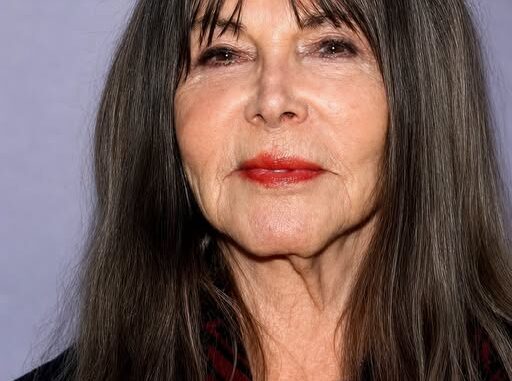
Lee Grant appeared destined for a remarkable Hollywood career in the early 1950s. Her performance in Detective Story earned critical attention and an Academy Award nomination, establishing her as a dramatic actress with unusual force. Yet the industry that praised her soon denied her work for more than a decade because she refused to remain silent during one of Hollywood’s most fearful periods.
The House Un-American Activities Committee investigations placed actors, writers, and directors under intense pressure to identify colleagues suspected of communist connections. Careers could disappear through accusation alone. Studios protected themselves by blacklisting artists who would not cooperate, creating a culture in which survival often depended on informing or avoiding politically sensitive speech.
The Cost of Silence
Grant’s husband at the time, screenwriter Arnold Manoff, was associated with left-wing political circles. Her own public remarks after the death of actor J. Edward Bromberg drew further attention. She connected his death to the stress caused by congressional investigations, a statement that challenged the climate of intimidation surrounding the entertainment industry.
-
Severe Consequences: Film opportunities disappeared, calls stopped, and a performer who had seemed on the edge of stardom was treated as though she no longer existed.
-
The Blacklist: Lasted roughly twelve years, representing prime creative time that no later success could return.
-
Artistic Preservation: Grant continued working where possible, particularly in theater, while raising a family and trying to preserve her craft.
The uncertainty damaged her confidence, and Hollywood’s obsession with youth created additional pressure. She later spoke openly about undergoing cosmetic surgery as she attempted to reenter an industry that had kept her away and then judged her for aging during the absence it imposed.
Triumphant Return and Directing
When the blacklist finally loosened, she rebuilt her screen career. Her return demonstrated that the talent recognized in Detective Story had never disappeared. She worked with major directors, took on complex roles, and eventually won the Academy Award for Best Supporting Actress for Shampoo in 1976.
Grant also moved behind the camera, becoming a director of documentaries and television projects. That transition allowed her to shape stories rather than wait for an industry to grant permission. Her documentary work often focused on social realities and people overlooked by mainstream attention, reflecting the political courage that had once cost her so much.
Her personal life continued beyond the era that tried to define her. She married producer Joseph Feury, a younger man, and built a long partnership with him. At more than ninety years old, she remained connected to a body of work spanning acting, directing, memoir, and public reflection.
A Lasting Legacy
Photographs comparing her youthful beauty with her later appearance can attract curiosity, but they risk missing the substance of her life. Every face changes over seventy years. The more revealing transformation was from promising newcomer to silenced artist, then from survivor to Oscar winner and filmmaker.
“Hollywood took twelve years, but it did not take her voice permanently. She returned, created work on her own terms, and lived long enough to describe clearly what had been done to her.”
Lee Grant’s story remains an indictment of an industry that allowed fear to erase talent. The executives and committees that tried to define her as unemployable became historical footnotes, while her performances continued reaching audiences. Grant’s later interviews did not soften the injustice, preserving evidence of how political fear operates inside cultural institutions—and why artists must be able to speak without losing their livelihoods.
Leave a Reply