
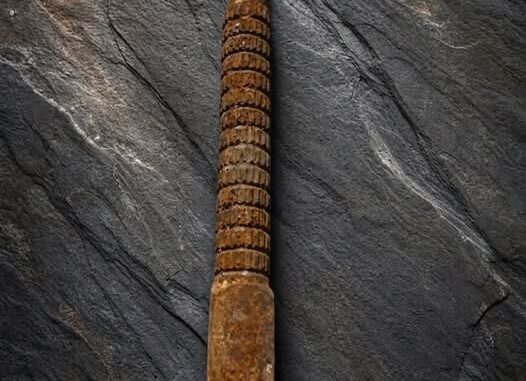
Among the tools found in old workshops and well-used toolboxes, few are as simple—or as useful—as the traditional nail punch. It may look insignificant compared with saws, drills, and hammers, but this small hand tool has long played an important role in producing clean, professional-looking woodwork.
A nail punch is typically used after a nail has been driven close to the surface of a piece of wood. With a carefully controlled tap from a hammer, the punch pushes the nail head slightly below the surrounding surface. The small indentation can then be filled, sanded, painted, or stained, leaving the finished surface smooth and polished.
It is a straightforward process, but it demonstrates an important principle of woodworking: the smallest finishing details can make a major difference.
A Small Tool With an Important Job
Driving a nail into wood is usually the easy part. Creating a clean final appearance requires more care.
When a nail head remains visible above the surface, it can interrupt the appearance of trim, cabinets, furniture, flooring, or other woodworking projects. A nail punch allows the craftsman to recess the head neatly without unnecessarily damaging the surrounding wood.
Once the nail has been set below the surface, the resulting indentation can be covered with an appropriate wood filler or finishing material.
The finished result can look almost seamless.
That is why the nail punch has remained useful for generations despite the arrival of modern power tools.
Why Older Craftsmen Valued It
Traditional woodworking often depended on patience and careful handwork.
Before cordless drills and specialized finishing equipment became common, craftspeople relied heavily on basic tools that could perform specific jobs with accuracy. The nail punch was one of those tools.
Its design is uncomplicated. There is no motor, battery, switch, or complicated mechanism.
It simply transfers the force of a hammer to the nail head while giving the user better control over where that force is applied.
That simplicity is part of its appeal.
A well-made hand tool can remain useful for decades because there are very few components to wear out or replace.
More Than Just an Old Tool
For some people, an old nail punch represents more than its practical purpose.
Tools passed down through families often carry visible signs of years of use. Scratches, worn surfaces, small dents, and polished handles can reveal how frequently they were handled.
A tool that once belonged to a parent or grandparent can therefore become a connection to earlier generations.
Using it on a project can feel like continuing a tradition of making and repairing things by hand.
Of course, the tool itself doesn’t create craftsmanship.
The skill comes from knowing when and how to use it.
Precision Over Power
One of the biggest lessons behind the nail punch is that finishing work isn’t always about using more force.
A heavy hammer strike may drive a nail too deeply or damage the wood around it. A controlled tap with a properly sized punch provides much greater precision.
The goal isn’t to make the biggest mark.
It’s to make the smallest useful one.
That philosophy applies to woodworking in general. Good results often come from patience, attention to detail, and knowing when to slow down.
Why It Still Has a Place Today
Modern workshops have plenty of convenient alternatives, but that doesn’t make traditional hand tools obsolete.
A nail punch is inexpensive, compact, easy to maintain, and useful for a variety of woodworking tasks. It also provides direct control that some craftspeople simply prefer.
For trim work, furniture repairs, small woodworking projects, and restoration work, a traditional nail punch can still be an efficient choice.
It also takes up very little room in a toolbox.
That may explain why so many old examples continue to turn up in workshops, garages, and inherited tool collections.
A Reminder of Traditional Craftsmanship
The vintage nail punch may never attract the attention given to larger or more sophisticated tools, but its purpose is an excellent example of how traditional craftsmanship works.
The hammer provides the force.
The punch provides the precision.
The finishing material hides the small indentation.
And the final surface reveals the result.
What remains visible isn’t the tool itself, but the quality of the work.
That is perhaps why this modest workshop tool continues to have appeal. It represents an approach to making things that values accuracy over speed and careful finishing over unnecessary complexity.
In a world filled with increasingly advanced equipment, the nail punch offers a simple reminder: excellent craftsmanship often depends less on having the newest tool and more on knowing how to use the right one.
Its design may be simple, but its purpose has endured for generations—and for anyone who appreciates careful woodworking, that is reason enough to keep one in the toolbox.
Leave a Reply