
-
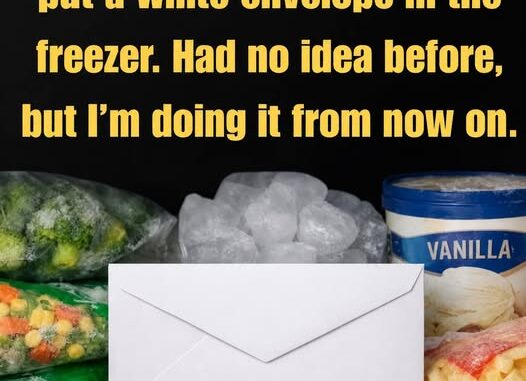
We’ve all been there—you seal an envelope, then immediately realize you forgot to include an important document or made a mistake in the letter. Instead of tearing the envelope open and starting over, there’s an old household trick that many people swear by: putting the envelope in the freezer.
It may sound unusual, but in some cases, this simple method can make it easier to open a sealed envelope without causing too much damage. Here’s how it works, when it’s effective, and when you’re better off trying another approach.
Why the Freezer Trick Works
Many traditional envelopes are sealed with a water-activated adhesive. When you moisten the flap, the glue forms a bond as it dries.
Cooling that adhesive in the freezer can make it more brittle and less flexible. If the envelope uses this older type of glue, the seal may loosen enough that you can carefully lift the flap without tearing the paper.
Keep in mind that this isn’t guaranteed to work with every envelope. The results depend largely on the type of adhesive used.
When It Has the Best Chance of Working
The freezer method is most effective if:
- The envelope uses a traditional lick-and-seal adhesive.
- It was sealed recently.
- The flap wasn’t soaked with too much moisture.
- The envelope is made from sturdy paper that won’t tear easily.
Under these conditions, the flap may separate more easily after being chilled.
When It Probably Won’t Work
Many modern envelopes use pressure-sensitive peel-and-stick adhesives rather than water-activated glue.
In these cases, freezing usually has little or no effect because the adhesive is designed to stay bonded regardless of temperature.
The trick is also less likely to work if:
- The envelope has been sealed for a long time.
- Heavy pressure was used when sealing it.
- The adhesive has fully bonded with the paper fibers.
- The envelope uses synthetic or specialty glue.
How to Try It
If you think your envelope is a good candidate, follow these steps:
- Place the envelope inside a resealable plastic bag to reduce moisture exposure.
- Put it in the freezer for about one to two hours.
- Remove it and let it sit for about a minute.
- Starting at one corner, gently lift the flap using your fingers or a dull butter knife.
- Work slowly and stop if the paper begins to tear.
Patience is important. Pulling too quickly can damage both the envelope and its contents.
Other Ways to Open a Sealed Envelope
If freezing doesn’t work, there are a few other methods you can try.
Use Steam
Holding the sealed edge above gentle steam for a few seconds may soften some water-based adhesives. Be careful not to overdo it, as too much moisture can wrinkle the paper or damage what’s inside.
Cut the Edge Carefully
A letter opener or craft knife can make a clean cut along one side of the envelope. While this won’t preserve the original seal, it often causes less damage than tearing it open.
Use a Warm Blade
Some people lightly warm a butter knife and carefully slide it beneath the flap to soften certain adhesives. Use caution, as too much heat can damage the envelope.
When You Should Skip the Freezer Trick
It’s better not to experiment if the envelope contains valuable or irreplaceable documents, photographs, legal papers, or sentimental items. In those situations, opening the envelope carefully with a letter opener is usually the safer choice.
Very thin or delicate envelopes are also more likely to tear, even if the adhesive loosens.
The Bottom Line
The freezer trick is an old household tip that can sometimes help open a sealed envelope without ruining it. It works best on traditional lick-and-seal envelopes with water-activated glue, but it’s far less effective on today’s peel-and-stick designs.
While it isn’t a guaranteed solution, it’s a simple technique that may save you from wasting an envelope when you need to retrieve something you’ve forgotten. If it doesn’t work, careful cutting or gentle steaming are often better alternatives.
The next time you accidentally seal an envelope too soon, you may not have to throw it away. A short trip to the freezer could be all it takes to give you a second chance—provided the envelope uses the right type of adhesive.
Leave a Reply