
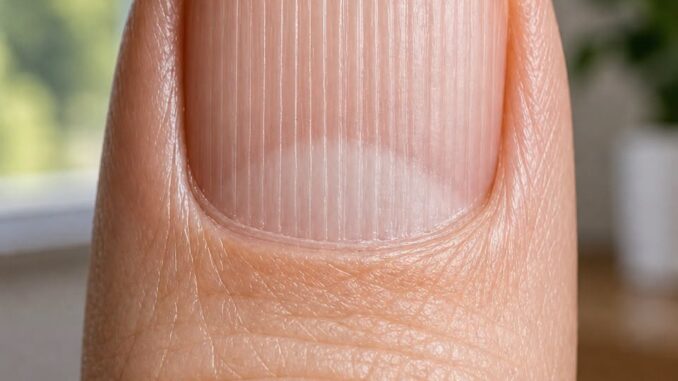
For most people, fingernails are an ordinary aspect of daily hygiene—something trimmed, polished, and forgotten. However, upon closer inspection, fingernails often display subtle textures, fine lines, and varying ridges. Online headlines frequently sensationalize these physical features with alarmist claims, asking what vertical lines “supposedly reveal” about your health. In reality, nail ridges are usually a natural reflection of biological processes, aging, and everyday growth.
Understanding the difference between harmless age-related nail changes and signs that require medical attention can prevent unnecessary anxiety while promoting better overall health awareness.
What Causes Vertical Nail Ridges?
Vertical ridges, medically referred to as longitudinal ridges, run from the cuticle at the base of the nail to the free edge at the tip. These lines act like miniature architectural grooves along the nail plate and are exceptionally common.
In the majority of cases, vertical ridges are simply a natural consequence of growing older. As the body ages, cell turnover slows, and the nail matrix—the specialized tissue beneath the cuticle responsible for producing new nail cells—undergoes gradual changes. Just as skin naturally loses elasticity and develops fine lines, the nail matrix produces a nail plate with varied cell density, resulting in visible ridges.
Common Harmless Factors Behind Vertical Ridges:
-
Natural Aging: The most frequent cause of pronounced longitudinal lines.
-
Dryness: Reduced moisture levels in the nail bed can accentuate ridge depth.
-
Genetics: Individual genetic traits influence overall nail texture and thickness.
Vertical vs. Horizontal Ridges: Knowing the Difference
Not all nail ridges carry the same physiological meaning. While vertical ridges are generally benign, horizontal grooves tell a different story about the body’s internal history.
┌────────────────────────────────────────────────────────────────────────┐
│                        VERTICAL VS. HORIZONTAL RIDGES                 │
├──────────────────────────────┬─────────────────────────────────────────┤
│ Ridge Orientation            │ Primary Causes & Significance           │
├──────────────────────────────┼─────────────────────────────────────────┤
│ Vertical (Longitudinal)      │ • Natural aging process                 │
│                              │ • Genetic variations                    │
│                              │ • Typically harmless and common         │
├──────────────────────────────┼─────────────────────────────────────────┤
│ Horizontal (Beau's Lines)    │ • Temporary growth interruption         │
│                              │ • Severe illness or high fever          │
│                              │ • Physical trauma or intense stress     │
└──────────────────────────────┴─────────────────────────────────────────┤
Horizontal indentations, often known as Beau’s Lines, occur when nail growth is temporarily interrupted or delayed. Because nails grow outward continuously at a rate of roughly 3 millimeters per month, a major physiological stressor—such as a severe illness, high fever, or localized physical injury—can leave a horizontal mark that slowly moves toward the tip as the nail grows.
When Should You Consult a Healthcare Professional?
While ordinary vertical ridges do not indicate a medical emergency, certain sudden or pronounced nail changes warrant professional evaluation. Context matters significantly when observing your hands.
Key Signs to Monitor:
-
Sudden Color Changes: Dark streaks, brown bands, or unusual discoloration beneath the nail plate.
-
Nail Separation (Onycholysis): The nail lifting away from the underlying pink nail bed.
-
Changes in Texture or Shape: Severe thickening, crumbling edges, or dramatic curving (clubbing).
-
Pain and Swelling: Redness, throbbing, or inflammation around the cuticle or lateral nail folds.
If you observe these symptoms affecting a single nail or appearing suddenly, consulting a dermatologist or primary care provider ensures an accurate diagnostic evaluation.
Simple Habits for Maintaining Healthy Nails
Protecting the integrity of your nails involves simple, consistent daily care rather than complex treatments:
-
Hydrate Regularly: Apply moisturizing creams or natural oils (such as jojoba or almond oil) to cuticles and nail beds to prevent brittle ridges.
-
Avoid Harsh Chemicals: Wear protective gloves when cleaning with strong detergents or using acetone-based polish removers.
-
Avoid Aggressive Grooming: Never forcefully push back or cut cuticles, as they serve as the protective barrier for the underlying nail matrix.
By shifting away from online health panic and focusing on practical observation, you can view your nails for what they truly are: a quiet, living record of time, cellular renewal, and the body’s ongoing resilience.
Leave a Reply