
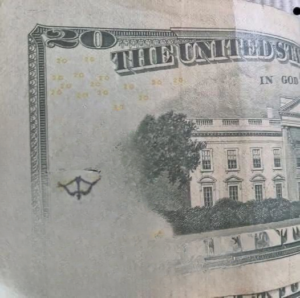
Most of us use cash without paying much attention to the details printed—or stamped—on it. But every so often, someone notices a small symbol, stamp, or ink mark on a U.S. dollar bill that seems out of place.
At first glance, these markings can raise questions. Are they signs of damage? Do they affect the bill’s value? Or do they tell a story about where that piece of currency has been?
In many cases, these unusual markings are connected to a long-standing practice known as chop marking, a tradition with roots in international trade that dates back centuries.
What Are Chop Marks?
Chop marks are small stamps, symbols, or ink markings placed on currency by merchants, money changers, or businesses after they have inspected and accepted it as genuine.
Long before modern banking systems and advanced security features became common, traders often relied on their own methods to verify money. A small mark served as a simple way to indicate that the currency had already been examined.
Rather than being mysterious, these markings were practical tools that helped build trust during commercial transactions.
A Tradition With Deep Historical Roots
The practice of chop marking originated centuries ago, particularly in parts of Asia where merchants frequently handled silver and gold coins.
Because verifying precious metals was essential for fair trade, merchants often stamped coins they had personally inspected. Each mark represented their approval.
Over time, a coin might accumulate several different marks from multiple traders. Instead of reducing confidence, these additional stamps often increased it by showing that several people had verified the coin.
As international trade expanded, similar practices eventually appeared on paper currency as well.
How U.S. Dollar Bills Acquired These Marks
The U.S. dollar has long been widely accepted in international markets.
As American currency circulated through different countries, some merchants continued the tradition of marking bills after confirming their authenticity.
These small stamps often served as quick visual references for future transactions, making it easier for other traders to recognize bills that had already been inspected.
As a result, certain dollar bills picked up unique markings during their travels through global marketplaces.
What Do the Symbols Mean?
Many people assume these markings contain hidden messages or secret codes, but that’s generally not the case.
Most chop marks simply identify the individual, business, or money exchange service that handled the currency.
They may appear as:
- Initials
- Numbers
- Simple logos
- Geometric shapes
- Small characters or symbols
Their meaning usually depends on the person or organization that applied them.
Do These Marks Affect a Bill’s Value?
In most everyday situations, a bill with minor chop marks or stamps still retains its face value, provided it remains genuine and identifiable.
Financial institutions generally continue to accept notes with light markings, although heavily damaged currency may be subject to separate guidelines.
For collectors, however, marked bills can be especially interesting because they reflect part of the currency’s circulation history.
A Glimpse Into Global Trade
Every banknote follows its own journey.
Some remain close to where they were issued, while others travel across countries and continents before returning to circulation elsewhere.
Chop marks offer a small glimpse into those journeys, reflecting how money has moved through different businesses, marketplaces, and communities over time.
They also highlight the importance of trust in commerce long before today’s digital payment systems and modern authentication technologies.
Why These Marks Still Fascinate Collectors
Although electronic payments dominate much of today’s economy, marked banknotes continue to attract interest from collectors and history enthusiasts.
Each symbol adds another chapter to the story of that particular piece of currency, offering a tangible reminder of its travels and the people who handled it along the way.
Final Thoughts
If you ever notice an unusual stamp or symbol on a U.S. dollar bill, it may be more than just random ink. In some cases, it reflects a historical practice that helped merchants verify currency and build trust in international trade.
These small markings remind us that every banknote has its own journey. While many pass quietly from one transaction to the next, others carry subtle traces of the places they’ve been—offering a fascinating connection to the history of global commerce.
Leave a Reply