
“With your patient,” he corrected gently.
The chief physician looked at me. “Your sister. Elena.”
My breath caught.
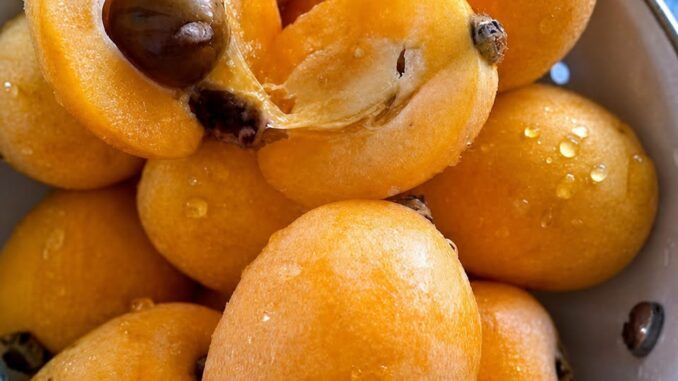
Just weeks earlier, I had been sitting beside Elena on our grandmother’s porch, peeling golden loquats for her. She always struggled with the large, glossy seeds in the center. She used to joke that the seeds reminded her of the burdens our family expected us to carry.
Now I was standing in a hospital corridor, waiting to hear whether my sister would survive a terrible fall.
The doctor continued.
“Elena is responding remarkably well. Her injuries are stabilizing, but she’s understandably shaken.”
I stared at the closed door.
For most of my life, I had been the responsible sister—the one who stayed calm, solved problems, and quietly carried whatever everyone else dropped.
My family had always treated Elena as fragile.
And somehow, that meant they treated me as though my only purpose was to protect her.
What they didn’t know was that I had spent eleven years becoming something they never imagined.
A surgeon.
The doctor glanced at me.
“Your initial intervention at the orchard was excellent. Whoever stabilized her after the fall knew exactly what they were doing.”
My relatives shifted awkwardly.
“Whoever did it?” he asked.
“I did,” I said quietly.
He smiled.
“I know.”
Then he looked around the room.
“And apparently, nobody bothered to mention that you’re a chief trauma surgeon.”
Silence.
My aunt stared at me.
“You’re a surgeon?”
“Yes.”
“For how long?”
“Eleven years.”
The words seemed to land harder than anything else.
Eleven years.
Eleven years of early mornings, long shifts, difficult cases, examinations, exhaustion, and responsibility.
Eleven years in which my family had continued thinking of me as the quiet sister standing in Elena’s shadow.
They had no idea how many lives I had helped save.
The chief physician closed the chart.
“Actually, Dr. Claire, I was looking for you because Elena woke up.”
My heart jumped.
“She keeps asking for you.”
I followed him into the room.
Elena looked pale and exhausted, but when she saw me, her eyes immediately filled with tears.
“You.”
“Hey, El.”
“You were there.”
I sat beside her.
“I was.”
“You saved me.”
I squeezed her hand.
“You’d better stop making me practice my trauma skills on you.”
She gave the smallest laugh.
Then she whispered, “Again.”
I knew what she meant.
I had spent years protecting her.
But something had changed.
For the first time, I realized I hadn’t been protecting Elena because she was incapable of standing on her own.
I had been doing it because our family had taught both of us to believe she needed me.
And perhaps I needed to believe it too.
Because being the caretaker had become part of my identity.
Elena looked at me.
“You know what you taught me about those loquats?”
“What?”
“That the seed isn’t the fruit.”
I smiled.
She continued.
“You always told me that you have to remove the seed before you can enjoy the whole thing.”
I nodded.
“And I think I finally understand.”
She looked toward the window.
“Some things are meant to be removed from your life.”
The words stayed with me.
Later, when I returned to the waiting room, my family was waiting.
My aunt stood first.
“We owe you an apology.”
I said nothing.
She looked uncomfortable.
“We didn’t understand what you had accomplished.”
“You didn’t try to.”
That hurt her.
But I needed to say it.
For years, whenever my career came up, someone made a joke.
I was too ambitious.
Too serious.
Too busy.
They said Elena needed me more.
They acted as though my accomplishments were somehow less important because I was the dependable one.
And I had accepted it.
Not because they were right.
Because I was tired of fighting.
My uncle finally spoke.
“We were jealous.”
I looked at him.
He continued.
“You were always the one people praised. Instead of being proud of you, we made jokes. We made you smaller because it was easier than admitting how much we’d accomplished.”
I took a breath.
“I never needed you to make me smaller.”
Nobody answered.
“I only needed you to see me.”
My aunt started crying.
“I see you now.”
I believed she meant it.
But something inside me had changed.
I no longer needed her recognition to know who I was.
That night, I walked outside the hospital alone.
The air was cool.
The parking lot was almost empty.
I looked up at the stars and thought about the little seeds inside those golden loquats.
For years, I had thought letting go meant abandoning someone.
Now I understood something different.
Sometimes letting go means releasing the role other people have assigned to you.
You can love your family without carrying their expectations.
You can care for someone without making their fragility your identity.
You can forgive people without giving them control over your future.
And you can finally stop waiting for permission.
I had spent years waiting for someone to tell me it was okay to be ambitious.
To be successful.
To take up space.
To be more than the responsible sister.
But nobody was coming to give me that permission.
I didn’t need it.
I was already a doctor.
I was already a surgeon.
I had already built a life.
And I had already become the woman I once hoped someone else would tell me I could be.
The next morning, I brought Elena a small container of golden loquats.
She smiled when she saw them.
“You brought seeds?”
“Of course.”
She laughed.
I sat beside her and began peeling one.
This time, neither of us complained about the seeds.
We simply removed them and placed them aside.
Because some things aren’t meant to be carried forever.
And sometimes the greatest act of letting go isn’t leaving someone behind.
It’s finally understanding that you were never meant to disappear inside their story.
I loved my sister.
I always would.
But I was finally ready to write my own story, too.
No permission required.
Leave a Reply