

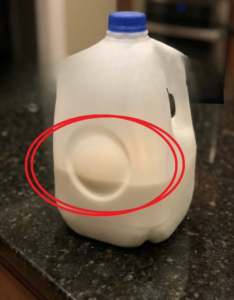
Most of us grab a milk jug from the refrigerator without giving much thought to its design.
But if you’ve ever looked closely, you’ve probably noticed a circular dent on the side of the container.
At first glance, it might seem like a random manufacturing detail or simply part of the jug’s appearance. In reality, that small indentation serves several practical purposes and is a clever example of everyday engineering.
Here’s why it’s there—and why it matters more than most people realize.
A Small Design Feature With a Big Job
Milk jugs may look simple, but they’re carefully designed to withstand transportation, storage, handling, and changing temperatures.
The circular dent helps manufacturers create a container that is both lightweight and durable.
Rather than being decorative, the indentation acts as a flexible area that can respond to changes in pressure and help the container maintain its shape.
Helping the Jug Handle Pressure Changes
Liquids naturally expand and contract when temperatures change.
Whether a milk jug is moved from a delivery truck to a refrigerator or exposed to varying storage conditions, pressure inside the container can fluctuate.
The circular dent provides a small area that can flex slightly when needed, helping the jug adapt to these changes without putting unnecessary stress on the plastic.
This simple design feature helps reduce the risk of warping or damage during transportation and storage.
Added Strength Without Extra Plastic
One of the most interesting aspects of the dent is that it helps strengthen the container while using less material.
Engineers often look for ways to improve durability without increasing weight or production costs.
The recessed shape adds structural support to the jug, allowing it to remain sturdy without requiring thicker plastic walls.
This means manufacturers can create strong containers while using fewer resources.
Helping Protect Against Everyday Impacts
Milk jugs are handled many times before they reach your kitchen.
They’re loaded onto trucks, moved through warehouses, stocked on shelves, and carried home in grocery bags.
During this process, containers can experience bumps and minor impacts.
The dent helps distribute stress across the surface of the jug, reducing the likelihood of damage and helping the container hold up better during normal use.
Why Is the Dent Circular?
The shape itself is no accident.
Circles are commonly used in engineering because they distribute pressure more evenly than shapes with sharp corners.
A circular indentation allows force to spread smoothly across the surrounding plastic, making it an efficient and reliable design choice.
It’s also easier to manufacture consistently on a large scale.
Can the Dent Tell You Anything About the Milk?
Some people believe the dent can act as a clue when something unusual is happening inside the container.
If pressure inside a jug changes significantly, the dent may appear slightly different than normal.
However, many factors can affect a container’s shape, including temperature changes and handling conditions.
Because of this, consumers should always rely on expiration dates, proper storage practices, and common signs of freshness rather than the appearance of the dent alone.
A More Sustainable Design
The circular indentation also supports sustainability efforts.
By allowing manufacturers to use less plastic while maintaining strength, the design contributes to:
- Reduced material use
- Lighter packaging
- More efficient transportation
- Lower overall resource consumption
Small design improvements like this can make a meaningful difference when multiplied across millions of containers each year.
Other Clever Features You May Have Missed
Milk jugs contain several thoughtful design elements beyond the circular dent.
The Handle Opening
The opening in the handle improves grip while also reducing the amount of plastic required.
Reinforced Base
The bottom of the jug is designed to help improve stability and support the weight of the liquid inside.
Lightweight Construction
Modern milk jugs are engineered to balance durability, convenience, and material efficiency.
Every detail serves a purpose.
Why Everyday Design Matters
Many of the products we use every day contain hidden features that most people never notice.
From food packaging to household tools, engineers continuously look for ways to improve safety, performance, efficiency, and sustainability through simple design choices.
The circular dent on a milk jug is a perfect example.
It’s easy to overlook, yet it helps the container remain strong, lightweight, and practical throughout its journey from the dairy to your refrigerator.
Final Thoughts
The next time you pour a glass of milk, take a closer look at the jug.
That small circular dent isn’t there by accident.
It’s a carefully designed feature that helps manage pressure, improve durability, reduce material use, and support efficient packaging.
While it may seem like a minor detail, it’s a reminder that some of the smartest engineering solutions are often the ones we barely notice.
And sometimes, the most ordinary household items have surprisingly thoughtful designs hidden in plain sight.
Leave a Reply