
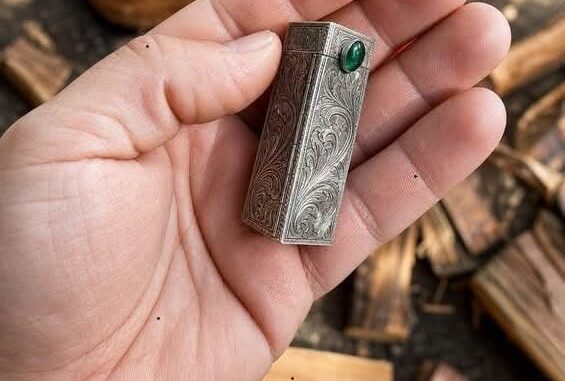
What looked like a small, ordinary object at a yard sale turned out to be a beautiful reminder of fashion history.
Vintage lipstick cases may seem simple by today’s standards, but earlier examples were often carefully designed accessories that reflected the style, craftsmanship, and social trends of their time.
During the 1920s and 1930s, lipstick cases became particularly fashionable. Many were produced from materials such as silver, brass, and gold, while more elaborate pieces featured enamel decorations, gemstones, engraved details, and geometric patterns associated with the Art Deco period.
These weren’t simply containers for cosmetics.
For many women, they were stylish personal accessories designed to complement the rest of an outfit.
A Fashionable Accessory From Another Era
The Art Deco period was known for bold shapes, symmetry, and decorative designs, and those characteristics could be found in many vintage cosmetic accessories.
Lipstick cases from this era sometimes featured intricate patterns and polished metal finishes. Their compact size also made them convenient to carry, turning an everyday cosmetic item into something that could be displayed and admired.
After World War II, cosmetic designs began to take on a different character.
Decorative styles increasingly included softer themes such as flowers, pearls, and romantic motifs. Some lipstick cases also incorporated small mirrors or additional compartments, making them practical as well as decorative.
When Cosmetics Became Collectibles
Some of the most elaborate examples were produced by luxury jewelry and fashion houses.
Companies such as Cartier and Tiffany & Co. created highly decorative cosmetic accessories using precious materials and detailed craftsmanship. These pieces reflected a period when everyday objects could also serve as expressions of personal style and social status.
A lipstick case could therefore be much more than a practical container.
It could represent fashion, craftsmanship, wealth, and changing ideas about beauty.
Why Collectors Love Them Today
Today, vintage lipstick cases attract collectors for several reasons.
Their small size makes them relatively easy to preserve and display, while their variety means collectors can find pieces representing different decades and design movements.
Some examples feature intricate engraving, unusual materials, colorful enamel, decorative stones, or distinctive shapes.
Others are valuable because of their maker, age, rarity, or historical significance.
Even an inexpensive piece discovered at a yard sale can sometimes have an interesting story behind it.
A Small Object With a Big Story
Perhaps the most fascinating aspect of vintage lipstick cases is their ability to connect everyday life with history.
A small accessory can reveal what people considered fashionable, how cosmetics were carried, what materials manufacturers used, and how design preferences changed over time.
That’s why collectors often describe these objects as miniature works of art.
They may be small enough to fit in the palm of a hand, but they can preserve a surprising amount of history.
The Appeal of Finding Vintage Treasures
Part of the excitement of yard sales, flea markets, antique shops, and estate sales is the possibility of discovering something that has been overlooked.
An object that appears ordinary at first glance may turn out to have unusual craftsmanship or historical value.
Vintage lipstick cases are a perfect example.
Whether displayed as part of a collection or simply appreciated for their design, they offer a glimpse into the changing world of fashion and cosmetics.
What may have started as a practical beauty accessory has become a sought-after piece of vintage design.
And for someone lucky enough to discover one at a yard sale, that little case can become much more than an old cosmetic container—it can become a tangible piece of history.
Leave a Reply