
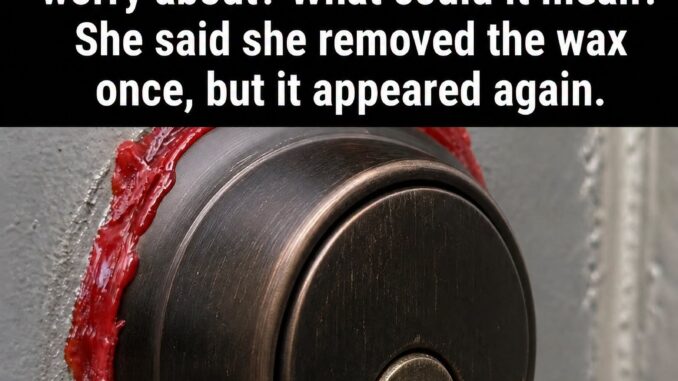
Imagine returning home after a long day and spotting something unusual on your front door lock—a small patch of red wax that you don’t remember seeing before. It’s the kind of discovery that naturally catches your attention and raises a few questions.
Was it left there by accident? Could it have come from a package or decoration? Or is it something you should investigate further?
Although stories about mysterious symbols or markings on homes often circulate online, there is very little verified evidence that red wax is part of any organized system used to identify houses for criminal activity. Even so, it’s always a good idea to pay attention when you notice something out of the ordinary around your home.
The best response is to stay calm, inspect the situation carefully, and take practical steps to make sure everything is secure.
Is Red Wax a Known Warning Sign?
Over the years, social media has shared countless claims about chalk marks, stickers, colored tape, and wax being used as secret codes by burglars.
While these stories can spread quickly, many law enforcement agencies have explained that there is little reliable evidence supporting the idea of a widespread marking system. In many cases, the claims become exaggerated as they are shared online.
That doesn’t mean unusual marks should be ignored—it simply means they shouldn’t automatically be viewed as proof of suspicious activity.
If you discover an unfamiliar substance on your door lock, it’s worth checking your property before making assumptions.
There May Be a Simple Explanation
Not every unusual mark has a serious cause.
Red wax could have ended up on your lock for a number of everyday reasons, including:
- Wax from a candle used during a celebration or holiday.
- Craft materials such as crayons or sealing wax.
- Residue transferred from a package or decorative envelope.
- Leftover material from nearby maintenance or repair work.
Sometimes the simplest explanation is the correct one.
Inspect Your Lock
Whether the wax is accidental or not, take a few moments to examine your lock closely.
Look for signs such as:
- Scratches around the keyhole.
- Loose screws or hardware.
- Bent or damaged parts.
- Fresh marks that could indicate attempted tampering.
- Difficulty locking or unlocking the door.
If the lock appears undamaged and the wax wipes away easily, there may be no cause for concern.
However, if you notice physical damage or the lock no longer works properly, it may be worth having it repaired or replaced.
Check Other Entry Points
After inspecting the front door, walk around your home and take a look at other possible entry points.
This includes:
- Windows
- Back doors
- Sliding glass doors
- Garage doors
- Side gates
- Outdoor storage buildings
Look for anything that seems unusual, such as damaged latches, broken screens, or signs that something has been disturbed.
Performing a quick inspection can provide peace of mind and help you spot maintenance issues before they become bigger problems.
Consider Updating Your Home Security
Even if the red wax turns out to have an innocent explanation, it can serve as a useful reminder to review your home’s security.
Simple improvements can make a noticeable difference, including:
- Installing quality deadbolt locks.
- Adding motion-activated outdoor lighting.
- Using a video doorbell.
- Installing exterior security cameras.
- Reinforcing door frames and strike plates.
- Considering smart locks that provide activity notifications.
Visible security features can also make a property appear less attractive to anyone looking for an easy target.
Don’t Overlook Outdoor Lighting
Good lighting is one of the easiest ways to improve security around your home.
Dark entryways, pathways, and side yards can reduce visibility, while well-lit areas make it easier to notice activity around the property.
Motion-sensor lights are especially popular because they activate only when movement is detected, helping improve visibility while using less energy.
Stay Connected With Your Neighbors
Neighbors often notice unusual activity before anyone else.
If you find something that concerns you, it may be helpful to ask whether anyone nearby has seen similar markings or unusual activity.
Likewise, trusted neighbors can keep an eye on your property while you’re away and let you know if anything appears out of the ordinary.
A connected neighborhood can be an effective way to stay informed without relying on rumors.
When Should You Contact Local Authorities?
If you discover clear signs of attempted forced entry, vandalism, or damage to your property, consider contacting your local police department through its non-emergency number.
Taking photographs of any unusual damage before cleaning or repairing it may also be useful if you’re asked to provide documentation.
If the situation appears to involve an immediate threat or active criminal activity, contact emergency services right away.
Everyday Habits That Improve Home Security
Many security improvements come from simple routines rather than expensive equipment.
Helpful habits include:
- Locking all doors and windows before leaving home.
- Keeping shrubs and trees trimmed near entrances.
- Avoiding hidden spare keys outside.
- Testing outdoor lights regularly.
- Making sure security devices are working properly.
- Closing the garage door whenever it’s not in use.
These small steps can help reduce risks and make your home feel more secure.
The Bottom Line
Finding red wax on your front door lock can certainly be surprising, but it doesn’t automatically indicate criminal activity. While online rumors often suggest mysterious markings are part of organized burglary schemes, there is little verified evidence to support those claims.
Instead of reacting with alarm, take a practical approach. Inspect your lock, check the rest of your property, and make sure your home’s security features are working as intended.
Staying observant, maintaining your home, and responding thoughtfully to anything unusual are some of the best ways to protect your property and enjoy greater peace of mind.
Leave a Reply