
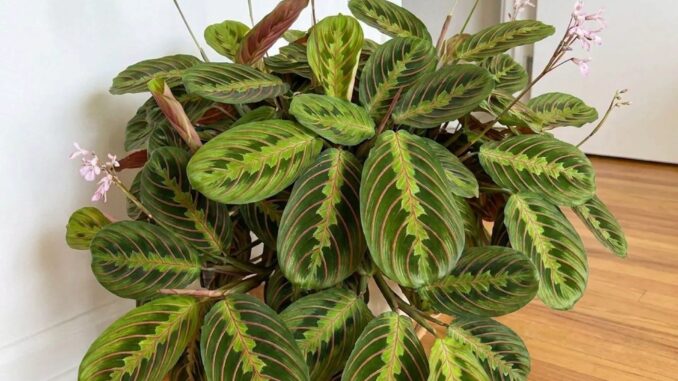
Few houseplants are as fascinating as the Prayer Plant. With its beautifully patterned leaves, vivid green colors, and remarkable habit of raising its leaves as the day changes, it can become a stunning addition to any indoor plant collection.
Prayer Plants can sometimes be a little demanding, though. Brown edges, curling leaves, drooping stems, and faded patterns may appear when the plant is exposed to the wrong conditions.
Fortunately, caring for one becomes much easier once you understand its basic needs. The key is to provide bright indirect light, evenly moist soil, warmth, good drainage, and adequate humidity.
Understanding the Prayer Plant
The plant commonly known as the Prayer Plant is generally associated with Maranta leuconeura, a tropical foliage plant admired for its oval leaves and intricate markings.
Its unusual daily movement is one of its most appealing features. During daylight hours, the leaves tend to spread outward. As evening approaches, they may gradually fold or lift upward. This movement is known as nyctinasty and is responsible for the plant’s familiar nickname.
Popular forms include:
- Red Prayer Plant, recognized by its prominent red veins.
- Green Prayer Plant, featuring darker green patterns across the leaves.
- Rabbit’s Foot Prayer Plant, known for its distinctive markings.
- Maranta ‘Fascinator’, a colorful form with pronounced red veining.
Although their appearances can vary, most Prayer Plants appreciate similar growing conditions.
1. Provide Bright, Indirect Light
Lighting plays a major role in maintaining healthy Prayer Plant foliage.
The ideal location receives plenty of bright but filtered or indirect light. In nature, these plants grow beneath tropical vegetation, where they receive light that has been softened by the surrounding canopy.
Good locations may include:
- A few feet from a bright window.
- Near an east-facing window where the morning sunlight is gentler.
- Near a north-facing window.
- Behind a sheer curtain in a room with stronger sunlight.
Avoid prolonged exposure to intense direct sunlight. Strong rays can scorch the leaves, fade their attractive patterns, or cause pale patches.
However, extremely low light isn’t ideal either. Insufficient light can lead to slower growth and less vibrant foliage.
A useful rule is simple: bright surroundings are good, but harsh direct sunlight on the leaves should be avoided.
2. Keep the Soil Evenly Moist
Prayer Plants generally prefer more consistent moisture than many drought-tolerant houseplants.
The soil should remain lightly and evenly moist, particularly while the plant is actively growing. However, moist doesn’t mean saturated.
Roots require oxygen, and soil that stays waterlogged for long periods can encourage root problems.
Before watering, check the surface of the potting mix. When the upper layer has started to dry slightly, it may be time to water.
When you water:
- Moisten the soil thoroughly.
- Allow excess water to escape through the drainage holes.
- Empty standing water from the saucer.
- Return the plant to its usual location.
During cooler months, the plant may grow more slowly and therefore require less frequent watering.
The goal is to avoid both extremes: don’t leave the roots sitting in water, but don’t allow the soil to become completely dry for prolonged periods.
3. Give It Plenty of Humidity
Humidity is another important consideration for Prayer Plants because they originate from tropical environments.
Dry indoor air can contribute to brown, crispy leaf margins and other signs of stress. This can be especially noticeable during winter or when indoor heating or air conditioning reduces humidity.
There are several ways to increase moisture around your plant.
Group Plants Together
Placing several houseplants near one another can create a somewhat more humid microenvironment as plants naturally release moisture into the surrounding air.
Try a Pebble Tray
Place pebbles in a shallow tray and add some water. Position the plant pot on the pebbles so that the bottom of the pot remains above the water.
The pot should not sit directly in standing water.
Use a Humidifier
A humidifier can be particularly useful when indoor air is consistently dry. It can also benefit other tropical plants growing nearby.
Consider a Humid Room
A bright bathroom can sometimes be an excellent location if it provides sufficient indirect light and remains comfortably warm.
4. Maintain Comfortable Temperatures
Prayer Plants generally prefer warm, stable conditions and can react poorly to cold drafts or sudden temperature changes.
Keep the plant away from:
- Cold drafts.
- Frequently opened cold windows.
- Air-conditioning vents.
- Direct blasts from heaters.
- Locations with major temperature fluctuations.
Consistency is more important than creating extreme warmth. A comfortable indoor environment is usually preferable to a spot that becomes very hot during the day and chilly at night.
5. Use Moisture-Retentive but Well-Draining Soil
Prayer Plants enjoy moisture, but their roots still need adequate airflow and drainage.
A light, airy potting mixture can provide a useful balance between moisture retention and drainage. For example, you might combine:
- Quality indoor potting soil.
- Coco coir or another material that helps retain moisture.
- Perlite to improve drainage and aeration.
The finished mix should feel loose rather than heavy, compact, or muddy.
A container with drainage holes is equally important. Without adequate drainage, excess water can accumulate around the roots and create unhealthy conditions.
6. Fertilize During Active Growth
Prayer Plants generally don’t require heavy feeding.
During the growing season, an appropriate balanced houseplant fertilizer can be applied according to the product’s directions.
Moderate feeding is usually preferable to excessive fertilization. Applying too much fertilizer can stress the plant and potentially damage its roots.
When growth naturally slows during cooler or darker months, reduce or stop fertilizing according to the plant’s condition.
Remember that fertilizer isn’t a substitute for proper light, watering, humidity, or healthy soil.
7. Prune Damaged Leaves
Regular maintenance can help keep your Prayer Plant attractive and healthy-looking.
Using clean, sharp scissors, remove foliage that is:
- Completely yellow.
- Severely brown or damaged.
- Dead or dying.
- Attached to weak or unattractive growth.
Removing damaged foliage also gives you an opportunity to inspect the plant for other problems.
If your plant becomes unusually sparse or develops long, awkward growth, selective pruning can help improve its overall appearance.
Prayer Plants can naturally spread or trail, so you can allow them to develop a relaxed shape or trim them to maintain a fuller appearance.
8. Propagating a Prayer Plant
Once your plant is mature and healthy, you may be able to propagate it and create additional plants.
Two commonly used approaches are division and stem cuttings.
Division
Division is generally performed when repotting a mature plant.
Carefully examine the root system and look for naturally separated sections containing their own roots and stems.
If suitable sections are present, they can be gently separated and planted individually. Each division should have healthy roots and sufficient foliage to support continued growth.
Stem Cuttings
Healthy stem sections can also potentially be propagated.
Select a healthy portion of the plant and make a clean cut with sanitized tools. The cutting can then be placed in an appropriate propagation medium.
Warm temperatures, indirect light, and adequate humidity can provide favorable conditions while the cutting develops roots.
Common Prayer Plant Problems
Even when you’re providing good care, Prayer Plants can occasionally develop problems. Fortunately, their foliage often gives you useful clues.
Brown Leaf Edges
Brown, crispy edges can have several possible causes, including dry air, inconsistent watering, excessive fertilizer buildup, or environmental stress.
Check the plant’s humidity, watering routine, soil condition, and location before changing several things at once.
Curling Leaves
Leaves may curl when the plant is experiencing stress. Possible contributors include insufficient moisture, excessive light, low humidity, or temperature problems.
Examine the growing conditions rather than assuming there is one universal cause.
Yellow Leaves
An occasional older leaf turning yellow can be natural, but widespread yellowing may indicate a problem with watering or the root environment.
If the soil stays wet for long periods, check the drainage and roots carefully.
Faded Leaf Patterns
If the beautiful markings on your Prayer Plant appear less vibrant, lighting may be a factor.
Very strong direct sunlight can bleach foliage, while extremely low light can contribute to weaker growth and less pronounced coloration.
Drooping
Drooping can occur for several reasons, including watering problems, temperature stress, root issues, or unfavorable light conditions.
Check the soil first and then consider the plant’s overall environment.
Final Thoughts
A healthy Prayer Plant doesn’t require perfection, but it does appreciate consistency.
Give it bright indirect light, evenly moist but well-drained soil, warm temperatures, and sufficient humidity, and you’ll have a much better chance of maintaining attractive, vigorous foliage.
Pay attention to what the leaves are telling you. Brown edges, curling, yellowing, fading, and drooping aren’t necessarily disasters—they’re often clues that one part of the plant’s environment needs adjustment.
With a little observation and regular care, your Prayer Plant can become a lush and striking feature of your indoor garden, rewarding you with beautiful foliage and its fascinating daily leaf movements.
Leave a Reply