
For months, I kept making excuses for my neighbor Denise.
She borrowed things constantly: my ladder, pressure washer, crock pot, steamer, cooler, roasting pan, and plenty of other household items. Most of the time, something came back late, dirty, or missing a small piece.
I usually let it go.
After all, we’d been neighbors for six years. Our children had grown up together, and we’d helped each other out plenty of times.
But eventually, Denise borrowed something that meant far more to me than she realized.
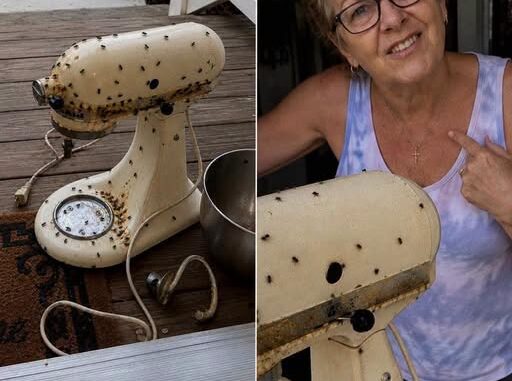
It was my mother’s old stand mixer.
My mother had bought it decades ago and used it almost every Sunday. After she passed away, I kept the mixer because hearing its familiar motor always reminded me of home.
So when Denise asked to borrow it for a cake, I hesitated.
“Please be careful with it,” I told her. “It belonged to my mom.”
She promised she would.
A few days later, I found the mixer sitting outside my front door.
There was dried frosting around the bowl and hardened residue near the body. The attachments hadn’t been washed, either.
I cleaned everything before plugging it in.
That’s when I discovered the problem.
The motor made a strange grinding noise, jerked once, and stopped.
I tried it again.
Same result.
My daughter, Sophie, looked at me.
“Did she break Grandma’s mixer?”
“I think so.”
I walked over to Denise’s house expecting an apology.
Instead, she barely reacted.
“Oh, yeah. It stopped while I was making the frosting.”
I asked whether she’d stopped using it when it began making the unusual noise.
She admitted she’d continued because she was trying to finish the cake.
Then came the part that really surprised me.
She suggested that I simply buy a new mixer.
“It was old anyway,” she said.
I reminded her that it had been working perfectly before she borrowed it.
She shrugged.
“Things wear out.”
I didn’t argue.
Instead, I took the mixer to an appliance repair shop.
The technician examined it and explained that the motor had overheated. It appeared the machine had been under too much strain and continued operating after it began struggling.
The repair estimate was $347.
I sent Denise the information.
Her response was immediate.
She said she wasn’t paying that much for an old appliance and suggested that I should be happy to have a reason to replace it.
That was the moment I realized arguing wasn’t going to solve anything.
So I changed my approach.
A few days later, Denise came to my house again.
Her niece’s graduation celebration was coming up, and she wanted to borrow several things from me: my large cooler, crock pot, and folding tables.
Normally, I would have simply handed them over.
This time, I brought out a clipboard.
I had written down each item, its approximate replacement value, the return deadline, and three simple conditions:
Everything had to come back on time, clean, dry, and in the same condition.
I also requested a refundable security deposit.
Denise stared at the paper.
“You’re serious?”
“Completely.”
I explained that the deposit wasn’t a punishment. It was simply a way to make sure we both understood the expectations.
The repair bill for the mixer was listed separately.
She wasn’t happy.
She called the whole thing ridiculous and accused me of being petty.
I told her she was welcome to rent the items elsewhere if she didn’t agree.
She eventually signed the agreement.
The following weekend, her party went ahead.
I didn’t interfere or try to make things difficult for her. I simply waited for the borrowed items to come back.
On Sunday afternoon, Denise returned everything.
And for the first time, everything was exactly as it should have been.
The tables were folded properly.
The cooler was clean and dry.
The crock pot was spotless.
The drink dispenser she had also borrowed was returned in excellent condition.
I handed her back the refundable deposit.
Then she asked about the mixer repair.
I told her the repair shop had already received the money.
She looked frustrated, but I didn’t argue.
Instead, I told her something I’d been thinking about since the beginning.
“The money isn’t what bothered me most.”
She looked at me.
“If you had told me the mixer stopped working and apologized, we could have handled this differently. What hurt was that you returned something important to me dirty, didn’t tell me it was broken, and then acted like it was my problem.”
For the first time, Denise didn’t have an explanation.
She looked down.
After a moment, she apologized.
It wasn’t dramatic.
There was no long speech.
Just a simple acknowledgment that she’d handled the situation badly.
I accepted her apology.
A few days later, the repair shop called to tell me the mixer was ready.
When I picked it up, the technician plugged it in.
The motor started smoothly.
That familiar sound immediately brought back memories of my mother standing in her kitchen on Sunday mornings.
I took the mixer home.
That weekend, Sophie and I made one of my mother’s old recipes.
As the mixer turned, Sophie smiled.
“Sounds just like it used to.”
“It does,” I said.
The mixer was old. It had scratches and a small chip in the enamel.
But replacing it had never been the point.
It carried memories that couldn’t be bought at a store.
Denise never asked to borrow it again.
In fact, she stopped casually borrowing my things altogether.
Months later, she did ask to borrow my pressure washer.
This time, she knocked on the door and asked properly.
“Do you still use that lending agreement?”
I smiled.
“Yes.”
She rolled her eyes.
“Fine. Give me the pen.”
She signed it.
And when the pressure washer came back, it was clean, on time, and ready to use.
The experience taught me something too.
Being a good neighbor doesn’t mean allowing people to disregard your boundaries.
You can be generous while still protecting the things that matter to you.
Sometimes, the most effective lesson isn’t an argument or a confrontation.
It’s simply making expectations clear and allowing people to understand that your kindness should never be mistaken for permission to be careless.
And my mother’s old mixer?
It’s still sitting on my kitchen counter.
It’s still scratched.
It’s still a little chipped.
And every time I turn it on, I hear a sound that reminds me of home.
That is something I will never consider “just an old appliance.”
Leave a Reply