
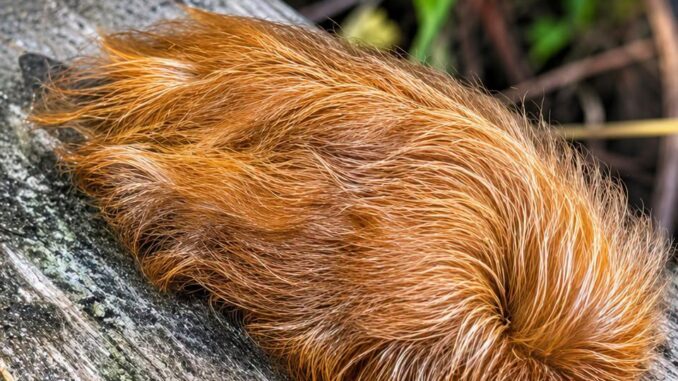
A small, furry caterpillar crawling across a leaf might look harmless, but some species are best admired from a distance. One important example is the puss caterpillar, the larval stage of the southern flannel moth (Megalopyge opercularis).
Its soft-looking coat can be misleading. Hidden beneath the hairs are venomous spines that can cause a painful reaction when they come into contact with human skin. Knowing how to recognize potential risks and respond safely can help you enjoy your garden without an unpleasant surprise.
What Does a Puss Caterpillar Look Like?
The puss caterpillar has a rounded body covered in long, silky hairs. Its shape resembles a tiny teardrop, with a narrower section toward the rear. Depending on its stage of development, its color may range from cream and gray to tan, golden brown, or darker shades.
These caterpillars are found in parts of the southeastern United States, where they may live on trees and shrubs. Their coloring can blend into leaves and branches, making them difficult to spot.
Although their appearance may remind you of a miniature furry animal, their coat should never be treated like ordinary fur. Avoid touching an unfamiliar caterpillar, even if it looks soft and harmless.
Why Can This Caterpillar Be Dangerous?
The puss caterpillar has venomous spines concealed beneath its outer covering. When someone brushes against or presses the insect, the spines can penetrate the skin and release venom.
Contact may cause intense pain, burning, redness, swelling, or other symptoms. In some cases, discomfort can spread beyond the original contact area. The severity of a reaction varies from person to person.
The caterpillar does not need to chase or attack anyone to cause harm. Accidental contact is enough.
This is why it is important to distinguish between an animal that is venomous and one that is poisonous. Venom is delivered through a specialized structure, such as a spine or fang, whereas poisons generally cause harm when they enter the body through ingestion or other exposure.
Are All Fuzzy Caterpillars Dangerous?
No. Many fuzzy caterpillars are relatively harmless to people, but others have irritating hairs or defensive spines that can cause skin reactions.
Woolly bear caterpillars, recognizable by their dark ends and reddish-brown middle band, are familiar visitors in many gardens. However, their appearance should not be used as a guide to identifying every furry species.
Some tussock moth caterpillars, for example, have hairs that can irritate sensitive skin. Since different species have different defenses, it is difficult to judge whether a caterpillar is safe simply by looking at it.
If you cannot confidently identify the insect, leave it alone and take a photograph from a safe distance.
Where Might You Find One?
Puss caterpillars can appear on trees, shrubs, and other vegetation in suitable habitats. You may encounter one while gardening, walking beneath trees, or inspecting plants around your home.
Finding one does not necessarily indicate an infestation or a serious problem in your yard. Caterpillars are part of the natural environment, and many are simply feeding as they grow.
If you spot one, avoid handling it. Keep children and pets away, particularly if they are likely to investigate unfamiliar insects with their hands, noses, or mouths.
There is usually no need to kill the caterpillar. Giving it space is often the simplest and safest response.
What Should You Do If You Touch One?
If you accidentally come into contact with a suspected puss caterpillar, avoid rubbing or scratching the affected skin.
Carefully applying adhesive tape and lifting it away may help remove embedded spines. Wash the area afterward, and seek advice from a healthcare professional or poison control service about appropriate treatment.
Do not ignore severe or worsening symptoms. Seek urgent medical attention if you experience difficulty breathing, swelling of the face or throat, faintness, or another serious reaction.
If you are uncertain about the seriousness of your symptoms, professional medical guidance is the safest option.
How Can You Stay Safe Outdoors?
A few simple precautions can reduce the risk of accidental contact:
- Avoid touching unfamiliar caterpillars. Their appearance does not reliably indicate whether they are safe.
- Supervise children around insects. Explain that some caterpillars should only be observed from a distance.
- Keep pets away. Curious animals may try to sniff, lick, or eat them.
- Wear gardening gloves. Gloves can offer additional protection, but they should not be considered a guarantee against every type of sting.
- Look before handling plants. Check leaves and branches when gardening, especially in areas where potentially stinging caterpillars occur.
What Does the Caterpillar Become?
The puss caterpillar eventually develops into the southern flannel moth. Like other moths, it undergoes a transformation during its life cycle, changing from a larva into a pupa before emerging as an adult.
Although its caterpillar stage is known for its defensive spines, the insect plays a natural role in its ecosystem. It is not deliberately seeking out people, and its presence does not automatically mean your garden is unsafe.
The Bottom Line
A fuzzy caterpillar may look like an inviting little bundle of fur, but appearances can be deceptive. The puss caterpillar is a good example of why unfamiliar insects should be observed rather than handled.
If you find one in your garden, keep your distance, protect curious children and pets, and avoid trying to identify it by touch. A photograph can satisfy your curiosity without putting your skin at risk.
Nature is full of fascinating creatures, and learning to recognize their defenses helps us appreciate them more safely. When it comes to an unfamiliar fuzzy caterpillar, the best rule is simple: look carefully, keep your hands away, and let it continue its journey.
Leave a Reply