
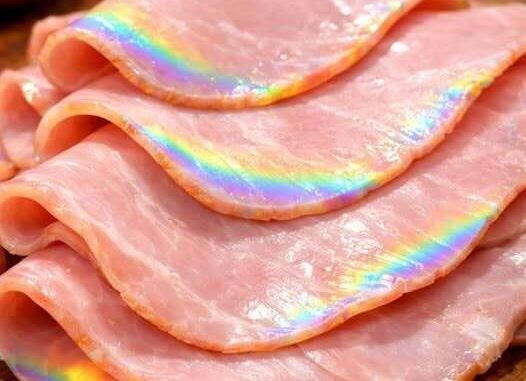
Why Some Ham Appears Rainbow-Colored
Have you ever opened a package of deli ham and noticed flashes of green, blue, or purple shimmering across the surface?
At first glance, it can be surprising. Many people assume that unusual colors on meat mean it has gone bad. Fortunately, that colorful shine is usually not a sign of spoilage.
In most cases, the rainbow effect seen on sliced ham is a completely natural occurrence caused by the way light interacts with the meat’s surface.
Understanding why it happens can help you determine when food is safe to eat and when it should be discarded.
What Causes the Rainbow Appearance?
The colorful sheen often seen on ham is known as iridescence. This phenomenon is similar to the rainbow colors that appear on soap bubbles, butterfly wings, oil on water, or the surface of a compact disc.
Ham contains tightly packed muscle fibers. When the meat is sliced very thinly, these fibers create microscopic layers that can bend and reflect light in different directions.
As light strikes the surface, it separates into various colors, creating the rainbow-like appearance many people notice.
Moisture on the meat can make this effect even more visible by helping light reflect more easily.
Because cured meats retain moisture and have a consistent texture, products such as ham often display iridescence more prominently than other types of meat.
Does Rainbow Ham Mean It’s Spoiled?
No. The rainbow sheen itself is not considered a sign of spoilage.
Many food scientists and meat industry experts recognize iridescence as a normal optical effect rather than an indication that the product is unsafe.
However, it is important to remember that the rainbow appearance does not guarantee freshness either. To determine whether deli meat is still safe to eat, you should pay attention to several other factors.
Check the Texture
One of the easiest ways to evaluate deli meat is by touch.
Fresh ham should feel smooth and slightly moist without being sticky.
If the meat develops a slimy coating, sticky surface, or unusual residue, it may indicate bacterial growth. In that situation, the ham should be discarded.
Texture changes are often a more reliable warning sign than color alone.
Trust Your Sense of Smell
Odor is another important indicator of freshness.
Fresh deli ham typically has a mild, savory aroma. If you notice a strong sour smell, an ammonia-like odor, or any unpleasant scent, it is best not to eat it.
Spoiled meat often develops noticeable odors long before major visual changes appear.
When in doubt, trust your nose.
Look for Concerning Color Changes
The rainbow effect changes depending on how light hits the surface. If you move the meat or change your viewing angle, the colors often shift or disappear.
Spoilage-related discoloration looks different.
Watch for signs such as:
- Gray or brown patches
- Green discoloration that remains visible from every angle
- Fuzzy spots or visible mold growth
- Areas that appear dried out or deteriorated
These changes may indicate that the meat is no longer safe for consumption.
Storage Time Matters
Even if ham looks and smells normal, proper storage remains essential.
Once opened, deli meats generally have a limited shelf life in the refrigerator. In many cases, they are best consumed within three to five days after opening, though storage recommendations may vary by product.
Certain bacteria can grow even under refrigeration, sometimes without obvious signs.
Always check packaging instructions and follow food safety guidelines.
Proper Storage Tips
Keeping deli meat fresh involves more than simply placing it in the refrigerator.
To maximize quality and safety:
- Store ham in a sealed container or tightly wrapped package.
- Keep it in the coldest section of your refrigerator.
- Avoid prolonged exposure to room temperature.
- Use clean utensils when handling the meat.
Proper storage helps slow bacterial growth and preserve freshness.
Why People Often Mistake the Rainbow Effect for Spoilage
Most people naturally associate unusual colors in food with contamination or decay. This instinct can be helpful, but it doesn’t always tell the full story.
Because rainbow-colored ham looks different from what many expect, it often raises concern.
In reality, the effect is caused by physics rather than spoilage. The interaction between light, moisture, and muscle fibers creates the colorful appearance without affecting the safety of the product.
Understanding this distinction can prevent unnecessary food waste while helping consumers make more informed decisions.
The Bottom Line
A rainbow sheen on deli ham is usually a harmless optical effect known as iridescence. It occurs when light reflects off the meat’s microscopic structure and is not typically a sign that the product has spoiled.
Instead of focusing solely on color, pay attention to more reliable indicators of freshness, including:
- Texture
- Smell
- Visible mold
- Persistent discoloration
- Storage time
If the ham feels slimy, smells unpleasant, shows signs of mold, or has been stored too long, it should be discarded.
But if the only unusual feature is a shifting rainbow shine, the meat is generally still safe to enjoy.
Final Thoughts
Food can sometimes appear unusual even when nothing is wrong. The rainbow colors seen on deli ham are a good example of how science can explain something that initially looks concerning.
By understanding the difference between harmless visual effects and genuine signs of spoilage, you can make safer food decisions, reduce waste, and feel more confident about what’s on your plate.
Leave a Reply