
There is something extraordinary about discovering an object that has survived for hundreds of years. Even the simplest item can offer a fascinating glimpse into how people lived, worked, and developed their societies long before modern technology existed.
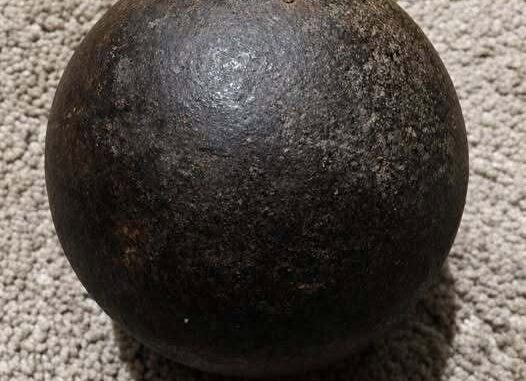
Among the many objects preserved in museums and historical collections, old iron cannonballs are particularly interesting. At first glance, they may appear to be nothing more than heavy metal spheres. However, these objects represent an important chapter in the history of engineering, manufacturing, and military development.
Beyond their original purpose, historical cannonballs can help researchers understand the technological abilities and industrial practices of earlier civilizations.
The History Behind Iron Cannonballs
Cannonballs were traditionally spherical projectiles designed for use in early artillery. Depending on the historical period and location, they were manufactured from different materials, including stone and cast iron.
As metalworking techniques improved, iron became a widely used material for producing artillery ammunition. Its strength and durability made it suitable for objects that needed to withstand demanding conditions.
The development of iron cannonballs also reflected improvements in manufacturing. Foundries became increasingly capable of producing projectiles with consistent shapes and dimensions, making military equipment easier to manufacture, organize, and transport.
These developments were connected to broader advances in metalworking, mining, engineering, and industrial production.
Why Early Cannonballs Were Spherical
The round shape of traditional cannonballs was closely related to the construction of early cannons.
Many early artillery pieces used smoothbore barrels, making spherical projectiles a practical choice for their design and manufacturing capabilities.
Producing round projectiles was also relatively straightforward compared with creating more complicated ammunition designs.
Although modern artillery technology has become considerably more advanced, these early designs represented important engineering achievements within the technological limitations of their time.
Different Sizes Tell Different Stories
Historical cannonballs were manufactured in various sizes and weights depending on the artillery systems for which they were intended.
Smaller projectiles could be handled more easily, while larger artillery pieces required heavier ammunition and more substantial equipment.
Researchers sometimes examine an artifact’s diameter, weight, material, and manufacturing characteristics to understand its possible origins.
However, measurements alone cannot establish an object’s exact history. Archaeological evidence, historical documents, and comparisons with previously identified artifacts are also important when determining its age and original purpose.
What Can an Old Iron Object Reveal?
An antique iron artifact can contain valuable clues about the period in which it was manufactured.
Its physical characteristics may reveal information about the materials and production techniques available at the time.
Researchers can examine:
- Material composition: This may provide clues about the metalworking methods used during production.
- Surface condition: Corrosion and other changes can indicate how an object was stored or exposed to environmental conditions.
- Dimensions and weight: Measurements may help researchers compare the artifact with known historical examples.
- Manufacturing marks: Certain physical features may provide evidence of traditional casting and production methods.
- Discovery location: The surrounding archaeological environment can help establish historical context.
Together, these details can transform an ordinary-looking object into an important source of historical information.
Why the Discovery Location Matters
An artifact’s location can be just as important as the object itself.
For example, an iron cannonball discovered at a documented historical battlefield may provide evidence connected to military activity in that area.
However, an identical-looking object found elsewhere might have been transported, collected, reused, or buried at a much later date.
Archaeologists therefore carefully document the exact circumstances surrounding discoveries.
Soil layers, nearby structures, associated objects, and historical records can all help researchers understand when and how an artifact became part of a particular location.
Without this information, much of its original story may remain unknown.
Understanding Corrosion and Preservation
Iron objects that remain underground or exposed to moisture for extended periods often develop corrosion.
The familiar reddish-brown appearance of old iron results from chemical reactions between the metal, oxygen, moisture, and its surrounding environment.
Although corrosion can sometimes provide clues about an object’s condition and exposure, it can also gradually damage important historical details.
For this reason, museums and conservation specialists take great care when examining and preserving old metal objects.
Aggressive cleaning or unnecessary handling may remove valuable surface evidence or cause further deterioration.
Proper conservation helps ensure that historical artifacts remain available for future generations.
Why Museums Preserve Ordinary Historical Objects
Not every historically important museum exhibit needs to be a valuable treasure or an extraordinary work of art.
Everyday objects can provide equally fascinating insights into earlier societies.
Cooking equipment, farming tools, coins, pottery fragments, clothing accessories, and military objects all help researchers understand different aspects of historical life.
An old iron cannonball might have limited financial value, but its educational and historical importance could be considerable.
Museums preserve these objects because they offer physical connections to people, technologies, and events from the past.
The People Behind Historical Military Technology
Military artifacts are often associated with famous battles and technological achievements. However, their history also involves countless ordinary people.
Mining workers collected raw materials, metalworkers produced equipment, engineers developed designs, and transportation workers moved supplies between different locations.
Soldiers and military personnel depended on these systems to maintain their equipment and carry out their responsibilities.
An individual cannonball therefore represents much more than a piece of military technology. It reflects a larger network of labor, resources, manufacturing, and engineering.
Understanding these connections makes historical objects even more meaningful.
How Cannon Technology Developed
Artillery technology changed significantly over the centuries.
Engineers gradually improved cannon construction, metal quality, manufacturing consistency, and ammunition design.
These developments helped make artillery systems more reliable and sophisticated.
Eventually, new technologies introduced different projectile shapes and more advanced ammunition designs.
Traditional spherical cannonballs belong to an earlier stage of this technological journey, reminding us that modern engineering developed through generations of experimentation and improvement.
From Historical Equipment to Educational Exhibits
Objects that once served practical purposes can eventually become important educational resources.
After being discovered, documented, and carefully preserved, historical artifacts may find a permanent place in museums and collections.
Visitors can examine their physical characteristics and learn about the societies that created and used them.
Museums sometimes provide replicas for interactive demonstrations, allowing visitors to experience historical objects without exposing fragile originals to unnecessary handling.
These experiences can make history more interesting, particularly for younger generations.
Final Thoughts: Small Objects, Remarkable Histories
Historical artifacts remind us that the past is not limited to photographs, written documents, or stories passed down through generations.
Sometimes, a simple piece of iron can reveal fascinating information about engineering, manufacturing, military history, and everyday life.
An old cannonball may appear ordinary today, but it represents the knowledge, resources, and human effort of the people who created it.
By studying and preserving objects like these, historians and archaeologists help future generations understand how earlier societies developed and how their achievements influenced the modern world.
Ultimately, the importance of a historical artifact is not determined by its appearance or financial value. Its greatest significance lies in the story it can help us uncover.
Sometimes, the smallest objects carry the biggest pieces of history.
Leave a Reply