

It began like any normal morning.
I stepped outside while the yard was still quiet, expecting nothing unusual. The grass was damp, the air was calm, and everything looked peaceful at first glance.
Then something near the edge of the yard caught my attention.
At first, I thought it was only a branch, dried leaves, or some garden debris resting near the shrubs. It blended into the ground so well that I almost looked away. But something about the shape and pattern made me pause.
I took a careful step closer.
That was when I realized it was not a branch at all.
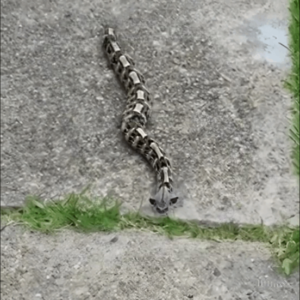
It was a Gaboon viper.
The snake was perfectly still and almost impossible to notice against the leaves and grass. Its natural pattern helped it blend into the ground so well that, from a distance, it looked like part of the yard.
I immediately stopped moving.
The Gaboon viper is one of Africa’s most well-known venomous snakes. It is especially recognized for its heavy body, impressive camouflage, and long fangs. While it is not known for chasing people, it can still be dangerous if someone accidentally gets too close or steps near it.
That was the most unsettling part.
The snake was not acting aggressively. It was not moving toward me. It was simply resting in place, relying on its ability to stay hidden.
Gaboon vipers are usually found in parts of sub-Saharan Africa, especially in forests, humid areas, and regions with thick ground cover. Their markings look similar to fallen leaves, which makes them extremely difficult to see in natural surroundings.
This camouflage helps them survive.
Instead of searching actively for food, they are ambush predators. They often remain still for long periods, waiting for small animals such as rodents, birds, or amphibians to come close. When prey is within reach, they can strike very quickly.
Even though their movements are often slow and calm, their strike can be fast and precise.
Gaboon vipers can grow quite large compared to many other venomous snakes. Their size, pattern, and stillness make them both fascinating and intimidating. They also have highly developed senses that help them detect movement and vibrations nearby.
After recognizing what I was seeing, I slowly backed away without making sudden movements. I kept my distance and avoided disturbing it.
The safest response in a situation like this is always to stay calm, move away carefully, and contact local wildlife or animal control professionals if needed. Trying to touch, move, or scare a snake can increase the risk of an accident.
Later, I learned more about Gaboon vipers and why encounters with humans often happen by mistake. These snakes usually do not seek conflict. Most risks occur when people do not see them and accidentally step too close.
That morning changed the way I look at outdoor spaces.
A yard can seem familiar, but nature can still surprise you. Leaves, branches, and shadows can hide animals that are simply trying to stay unnoticed.
It also reminded me that even animals people fear have an important role in the environment. Snakes help control rodent populations and support the balance of their ecosystems.
Still, respect and distance are essential.
Now, when I walk through the yard, especially near tall grass, shrubs, or leaf-covered areas, I pay much closer attention. I move carefully, watch where I step, and avoid reaching into places I cannot clearly see.
What looked like an ordinary shape on the ground turned out to be a powerful reminder.
Nature does not always announce itself loudly. Sometimes it sits quietly, perfectly hidden, waiting to be noticed.
And sometimes, noticing just in time is what keeps an ordinary morning from becoming something far more serious.
Leave a Reply