

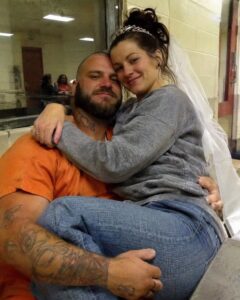
I agreed to marry a man serving a twelve-year prison sentence because I desperately needed money. I thought our marriage was nothing more than an arrangement that would help me keep a roof over my younger brother’s head.
But three years later, when my husband’s conviction was overturned, he returned home carrying a small black box.
What I discovered inside revealed that his mother had been hiding something from me since the day we met.
And suddenly, I understood that I hadn’t been chosen by chance.
The Offer That Changed My Life
I was twenty-seven when everything began.
My younger brother, Owen, was seventeen, and I had been responsible for him since our parents were no longer around.
I worked long shifts, carefully planned every grocery trip, and constantly worried about the next bill.
Despite my efforts, we were falling behind.
One morning, I found a final rent notice attached to our apartment door.
Owen noticed it before I could put it away.
“Are we going to lose the apartment?” he asked.
I folded the paper and tried to sound reassuring.
“I’m working on it.”
But I didn’t have a solution.
Later that day, I received a telephone call from a woman representing Celeste, the wealthy mother of a man named Jonah.
She explained that Celeste had learned about my circumstances through a legal assistance contact.
She wanted to meet me.
Normally, I would have refused a meeting with a stranger who knew so much about my financial difficulties.
But I was running out of options.
So I agreed.
Celeste welcomed me into an elegant office filled with expensive furniture and carefully arranged decorations.
She didn’t waste time.
“I’m prepared to pay you two thousand dollars every month,” she said.
I stared at her.
“For doing what?”
“Marrying my son.”
I thought I’d misunderstood.
Celeste explained that Jonah was serving a twelve-year prison sentence following a conviction involving money taken from a family charitable foundation.
She wanted him to have a wife who would visit regularly, exchange letters with him, and demonstrate that he had a stable personal relationship.
“You wouldn’t need to live with him,” she explained. “Just visit twice a month and maintain contact.”
“Why would you choose me?”
“Because you understand what it means to take responsibility for someone else.”
At the time, I thought she was referring to Owen.
I had no idea how carefully she’d investigated my life.
I asked whether Jonah was dangerous.
Celeste assured me that he wasn’t.
Then she repeated the offer.
Two thousand dollars every month.
I thought about our overdue rent, the empty refrigerator, and Owen’s worn-out shoes.
Finally, I agreed.
But I insisted on receiving the first payment before the wedding.
Celeste accepted immediately.
That should have made me suspicious.
Instead, I felt relieved.
A Marriage Neither of Us Expected
When I told Owen about the arrangement, he was horrified.
“You’re marrying someone you’ve never met?”
“It’s a legal arrangement,” I explained. “Nothing more.”
“Because of me?”
“Because we need to survive.”
He offered to leave school and find full-time work.
I refused.
I had spent years trying to give him a chance at a better future.
I wasn’t going to let him sacrifice his education.
A few weeks later, I met Jonah inside the correctional facility.
He wore a plain prison uniform and looked exhausted.
I expected someone arrogant or resentful.
Instead, he spoke quietly and seemed uncomfortable with the entire arrangement.
“You don’t have to pretend you believe I’m innocent,” he told me.
“I wasn’t planning to.”
To my surprise, he smiled.
Then he admitted something I hadn’t expected.
He had taken $18,000 from a restricted account belonging to his family’s foundation.
He explained that he’d believed he could replace it once he regained access to his trust.
“It was wrong,” he said. “I know that now.”
But he insisted that he hadn’t taken the much larger amount involved in the case.
According to Jonah, his cousin Dean had transferred approximately $600,000 and used forged documents to make Jonah appear responsible.
“Why didn’t you fight harder?” I asked.
Jonah looked down.
“Because I’d already done something wrong. Eventually, I started believing I deserved everything that happened afterward.”
I didn’t know whether to trust him.
But I appreciated that he hadn’t tried to make himself sound perfect.
We signed the marriage documents under the supervision of prison staff.
And just like that, I became Jonah’s wife.
When Pretending Became Something Real
At first, I treated our marriage like a job.
I visited twice a month, wrote letters, and fulfilled the expectations Celeste had outlined.
The monthly payments helped me catch up on rent and provide for Owen.
I told myself that was all that mattered.
But Jonah made it difficult to remain emotionally distant.
He remembered details from my letters.
When I mentioned Owen struggling with mathematics, Jonah asked about his next test during our following visit.
He even drew a little cartoon of Owen as a superhero called Captain Algebra.
His letters contained sketches, thoughtful questions, and small attempts to make me smile.
He wanted to know how my work was going.
He reminded me to eat properly during long shifts.
And he listened when I talked about things that worried me.
Gradually, I stopped counting our visits as obligations.
I began looking forward to them.
One evening, I found myself rereading his court documents.
Something about the dates bothered me.
A financial transfer had supposedly been authorized by Jonah on a day when he was already in custody.
I checked the records again.
The signature was there.
But the timeline didn’t make sense.
I called Owen into the room.
“Look at this.”
He studied the documents.
“How could Jonah have signed that if he was already in prison?”
“That’s exactly what I want to know.”
That night, we began building a timeline.
Three Years of Searching for Answers
Our apartment slowly filled with paperwork.
Owen helped me organize bank records, witness statements, court filings, and copies of financial documents.
We compared dates and looked for inconsistencies.
Eventually, I took our findings to a legal aid attorney.
She explained that Jonah’s admitted wrongdoing complicated his case.
“I understand that,” I told her. “I’m not trying to excuse what he actually did. I’m trying to find out whether he was blamed for something much larger.”
The attorney agreed to review the material.
That first meeting led to more appointments, additional research, and eventually the involvement of an appellate lawyer.
The process was exhausting.
I missed work shifts, spent hours waiting in courthouse hallways, and used much of my free time reviewing documents.
Celeste wasn’t pleased.
She warned me that I was becoming too involved.
But I continued.
At one prison visit, Jonah asked me to stop.
“You’ve already done enough,” he said. “You don’t owe me your whole life.”
I looked at him through the glass.
“I’m not doing this because I owe you.”
“Then why?”
For a moment, I couldn’t answer.
Then I realized the truth.
“Because I love you.”
Jonah stared at me.
Neither of us spoke for several seconds.
Then he pressed his hand against the glass.
I placed mine opposite his.
Our marriage had begun as an arrangement.
Somewhere along the way, it had become real.
The Day Jonah Came Home
After three years, the investigation uncovered evidence supporting Jonah’s account of the larger theft.
Documents had been forged, and financial records pointed toward Dean’s involvement.
The conviction connected to the larger amount was overturned.
Jonah remained responsible for repaying the money he had admitted taking, but he was no longer being held accountable for the entire $600,000.
When he finally walked out of the courthouse, I expected him to be overjoyed.
Instead, he looked overwhelmed.
He wore a gray suit that hung loosely on his shoulders.
I hurried toward him.
“You’re free,” I whispered.
He held me tightly.
But there was something troubled in his expression.
“Are you sure you want me to come home with you?” he asked.
“Jonah, you’re my husband.”
He nodded, but the sadness in his eyes didn’t disappear.
For the next week, we tried to settle into an ordinary life.
Jonah struggled to sleep through the night.
Owen was polite but cautious around him.
I did my best to make our small apartment feel welcoming.
We cooked together, went grocery shopping, and talked about what the future might look like.
I thought we were finally beginning a happier chapter.
Then, on the eighth evening, Jonah entered the kitchen holding a black box.
He placed it in front of me.
“Sadie, there’s something I need to tell you.”
I looked at the box.
“What is it?”
He pulled out a chair and sat down.
“When you agreed to marry me, you became involved in something you didn’t understand.”
My stomach tightened.
“What are you talking about?”
“My mother didn’t choose you randomly.”
I stared at him.
“Then why did she choose me?”
He pushed the box closer.
“Please open it.”
The Secret Inside the Black Box
Inside was a cream-colored notebook.
I recognized Celeste’s handwriting immediately.
The first page contained notes about me.
My age.
My family situation.
My financial difficulties.
The fact that I was raising a younger brother.
Then I reached a section that made my hands shake.
Celeste had written that I had no active parental support, was behind on rent, and would likely cooperate as long as the payments continued.
I read the words several times.
“She investigated me?”
Jonah nodded.
“Yes.”
“She knew how desperate I was?”
“Yes.”
I felt sick.
All those years, I’d believed Celeste had chosen me because she admired my responsibility toward Owen.
But the notebook suggested something entirely different.
She had chosen me because she thought I would be easy to control.
Beneath the notebook was another document.
It contained legal language about a family trust.
And my name appeared on it.
I looked up.
“Why am I listed as a co-trustee?”
Jonah took a deep breath.
He explained that his late father had created a provision in the family trust.
Under certain conditions, if Jonah married while incarcerated and the relevant conviction was later overturned, his lawful spouse could receive emergency authority as a co-trustee.
His father had apparently been concerned about how the foundation and family assets were being managed.
Celeste knew about the provision.
She also knew that a wife with independent resources might challenge her control.
So she had selected someone financially vulnerable.
Someone she believed would accept payments, follow instructions, and never question the arrangement.
Me.
I looked at Jonah.
“How long have you known?”
He hesitated.
“Not from the beginning.”
“How long?”
“About six months before the appeal hearing.”
I stared at him.
“You knew for six months and never told me?”
“I was afraid of what would happen if you found out.”
“You should have trusted me.”
“I know.”
I closed the box.
“Jonah, I admitted why I married you. I never pretended I was doing it for love in the beginning.”
He lowered his eyes.
“But when I fell in love with you, that was my decision. You should have given me the truth so I could make my own choices.”
He tried to apologize.
I wasn’t ready to listen.
I asked him to leave for a while.
He looked heartbroken, but he respected my request.
After the door closed, Owen came into the kitchen.
He had heard enough to understand what had happened.
He picked up Celeste’s notebook and read the pages.
Then he looked at me.
“She thought she could control you because we were poor.”
I nodded.
Owen placed the notebook on the table.
“Then maybe it’s time she found out she was wrong.”
Celeste’s Final Offer
The following morning, Celeste called.
She wanted to meet privately.
I brought copies of the trust documents and her notebook.
Her office looked exactly as it had three years earlier.
The polished furniture.
The expensive decorations.
The carefully controlled atmosphere.
But I no longer felt intimidated.
Celeste greeted me pleasantly and offered me a seat.
“You’ve been very helpful to our family,” she said.
Then she placed a check on the desk.
One hundred thousand dollars.
For a moment, I couldn’t stop looking at it.
That money could have changed Owen’s future.
It could have paid for his education, replaced our unreliable car, and given us financial security we’d never experienced.
“What do you want in return?” I asked.
Celeste opened a folder.
“A simple resignation from your trustee position.”
I looked at the paperwork.
She wanted me to surrender any authority I might have under the trust.
In exchange, she would pay me and expect me to walk away.
I pushed the check back.
“No.”
Her expression hardened.
“Sadie, think carefully.”
“I have.”
“You don’t understand the responsibilities involved.”
“Then I’ll learn.”
She leaned back.
“You’re making a mistake.”
I stood.
“The mistake was believing I would never ask questions.”
For the first time since I’d met her, Celeste had nothing to say.
The Day I Finally Spoke Up
A few weeks later, the foundation held a luncheon for donors and board members.
Celeste intended to reassure everyone that the family’s legal troubles were behind them.
I attended with the black box.
Jonah and Owen were also there.
When Celeste finished speaking, I stood.
She looked surprised to see me approaching the front of the room.
“Sadie, this isn’t appropriate.”
“I think the board deserves to know what happened.”
I placed the box on the podium.
Then I explained the arrangement.
I told the room that Celeste had paid me $2,000 a month to marry Jonah while he was incarcerated.
I didn’t hide my own reasons for accepting.
“I needed money to support my younger brother,” I said. “I agreed because I was desperate.”
People began whispering.
Then I opened the notebook.
I read the notes Celeste had written about my financial circumstances.
I explained that she’d selected me because she believed I would be unlikely to challenge her decisions.
Next, I showed the trust provision.
I asked the board to review the documents and investigate whether the foundation’s governance had been handled properly.
Dean attempted to interrupt.
I reminded everyone that financial records had already raised serious questions about transactions made using Jonah’s name while he was incarcerated.
Several board members began asking questions.
Celeste tried to regain control of the meeting.
But the discussion had changed.
One board member requested that the documents be reviewed by independent legal counsel.
Another proposed an emergency meeting to examine the foundation’s leadership and financial records.
For the first time, Celeste could not simply end the conversation.
The people responsible for overseeing the charity were finally asking questions.
What Happened Afterward
The following months brought more investigations and difficult conversations.
Dean faced charges connected to the disputed financial transactions.
Celeste was removed from her leadership position at the foundation.
The trust arrangements were reviewed, and new oversight procedures were introduced.
Jonah completed the restitution required for the money he’d admitted taking.
As for me, I began helping review scholarship applications through the foundation.
I wanted the organization to support families who genuinely needed assistance.
Families like mine.
Owen was preparing for the next stage of his education, and for the first time, we could make plans without constantly worrying about overdue bills.
Jonah and I were slowly rebuilding our relationship.
He never pressured me to forgive him.
Instead, he listened when I explained how much his silence had hurt.
One afternoon, he found me reviewing scholarship applications at the kitchen table.
“You look like you belong there,” he said.
I smiled.
“I do.”
He sat across from me.
“I should have told you everything when I found out.”
“Yes, you should have.”
“I’m sorry.”
“I know.”
He reached for my hand.
“I want to spend the rest of my life proving that I can be someone you trust.”
I looked at him.
“Then start by telling me the truth, even when it’s uncomfortable.”
He nodded.
“I will.”
Owen appeared in the doorway.
“Are we having dinner, or are you two going to keep having serious conversations all evening?”
We both laughed.
It was the first time in months that the three of us had felt comfortable together.
A Different Kind of Beginning
I didn’t forgive Jonah immediately.
Trust takes time to rebuild, especially when someone has withheld information that affects your life.
But gradually, I began to see that he was making a genuine effort.
He answered my questions.
He respected my decisions.
And he stopped trying to protect me by deciding what I should or shouldn’t know.
When I first married Jonah, I was a frightened twenty-seven-year-old trying to keep my younger brother safe.
I accepted an arrangement because I couldn’t see another way forward.
I had no idea that the wealthy woman offering to help me had carefully selected me for reasons she never intended to reveal.
But the experience taught me something important.
Financial hardship had influenced my first decision.
It didn’t have to control every decision afterward.
I could choose what kind of life I wanted.
I could choose which responsibilities to accept.
And I could decide whether my marriage deserved another chance.
The first time I married Jonah, I was trying to survive. The second time I chose him, I did it because I finally had the freedom to decide for myself.
THE END.
Leave a Reply