

For much of my adult life, simply getting by felt like a full-time job.
Every month brought another round of rent, utility bills, groceries, and unexpected expenses. I lived in a modest apartment with a drafty window, a flickering kitchen light, and a constant feeling of uncertainty.
At 32, I was working long hours, carefully managing my expenses, and wondering whether life would ever become more comfortable.
Then I met Russell Harrison.
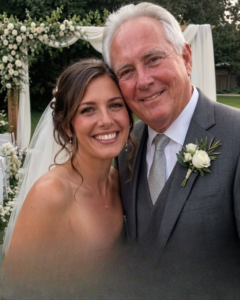
Russell was nearly 30 years older than me and came from a very different world. He was successful, financially comfortable, and accustomed to a lifestyle I had never experienced.
But his money wasn’t what first caught my attention.
It was his kindness.
I met Russell while working at a charity dinner. After several hours on my feet, I was exhausted and trying to finish my shift quietly. Russell noticed that I was uncomfortable and offered me a chair so I could rest for a few minutes.
It was a small gesture, but it stayed with me.
For once, I felt noticed.
That conversation became another, and then another. Before long, we were speaking every day.
Russell was a widower who had spent years adjusting to life after losing his wife. Despite having many material comforts, he often seemed lonely. We discovered that we enjoyed many of the same simple things: books, gardening, cooking, and sharing stories about our very different experiences.
Three months later, Russell proposed.
His words surprised me.
“I’m not asking you to love me,” he said. “I’m asking you to let me be part of your life and help you build a more secure future.”
I knew people might question my decision.
Some assumed I was interested in his wealth. Others believed our age difference made the relationship unusual.
The truth was more complicated.
I had spent years worrying about money and trying to create a stable life. Russell offered me something I had rarely experienced: a sense of security and genuine companionship.
So I said yes.
Not everyone welcomed me into Russell’s family.
His eldest daughter, Marlene, was skeptical of our relationship from the beginning. She believed I had married her father for financial reasons and was often distant toward me.
At one family gathering, she confronted me near the staircase.
“You think you’re going to inherit everything?” she asked.
Before I could answer, Russell appeared.
He had heard the conversation.
Looking at his daughter, he simply said, “She will receive what I believe is right.”
At the time, I didn’t know what he meant.
As the months passed, our relationship changed in ways neither of us had expected.
What had begun with uncertainty gradually became genuine affection.
Love was found in the smallest moments.
It was the peppermint tea Russell prepared whenever I was stressed.
It was the way he left the curtains slightly open because he knew I disliked sleeping in complete darkness.
It was how carefully he listened whenever I spoke and remembered details I assumed everyone had forgotten.
For the first time, I felt appreciated simply for being myself.
Then Russell became seriously ill.
His condition worsened quickly, and the doctors told us that he might have only a short time left.
I spent as much time with him as I could. There were still disagreements within the family, but Russell remained calm.
During one of my final visits, he took my hand.
“Don’t fight them,” he whispered.
Then he added, “Trust me.”
I didn’t understand what he meant.
A few days later, Russell passed away.
At his funeral, I stood quietly among the other mourners. His children received condolences from friends and relatives, while I remained nearby.
I knew some people were questioning my intentions.
But they didn’t know our story.
They didn’t know how much Russell had come to mean to me.
After the service, Russell’s attorney approached me.
“He left some specific instructions,” he explained. “I’d like you to come to my office tomorrow morning.”
The following day, I arrived at the attorney’s office and found Marlene and her brothers already there.
A small wooden box sat on the desk.
The attorney placed it in front of me.
“Russell wanted you to have this first.”
Inside was a photograph from the charity dinner where we had met. I was smiling while carrying a tray of glasses.
Beneath the photograph was a handwritten letter.
Before I could finish reading it, Marlene interrupted.
“Let’s just hear what the will says.”
The attorney opened the document.
What followed surprised everyone in the room.
Russell had arranged for me to receive his home and a significant portion of his estate, along with ownership interests in his business. His children were also provided for through financial trusts designed to support their housing, education, and healthcare needs.
The arrangements had been carefully documented, leaving little room for misunderstanding.
Marlene was upset.
She questioned Russell’s decision and accused me of influencing him.
But then I read a passage from his letter.
“I watched you refuse my offer of financial help when you said you only wanted my companionship. That told me more about your character than anything else could have.”
My hands began to shake.
Then I shared something else with the family.
I was pregnant.
Russell had learned the news shortly before his health declined.
For a moment, the room was completely silent.
The months that followed were filled with paperwork, difficult conversations, and adjustments to a very different future.
Eventually, the tension within the family eased. Marlene and her brothers accepted the arrangements Russell had made, and each of us began moving forward in our own way.
But the inheritance was never the most important part of what Russell left behind.
His greatest gift was the life we had shared and the confidence he helped me discover in myself.
I finally understood what he meant when he said, “She will receive what she deserves.”
He wasn’t simply talking about money or property.
He was talking about dignity, stability, trust, and the opportunity to build a meaningful future.
Today, I keep the photograph from that charity dinner beside my bed.
It reminds me of the person I was before I met Russell—a woman working hard to build a better life without knowing how much her circumstances would eventually change.
Some evenings, I make a cup of peppermint tea and sit by the window, thinking about him.
I still miss him.
But I am grateful for the time we had together and for the lessons he left me with.
His final gift wasn’t simply an inheritance.
It was the reminder that a person’s worth cannot be measured by their bank account, their circumstances, or the assumptions other people make about them.
Sometimes, the most meaningful gifts are the ones that help us recognize our own value.
Leave a Reply