
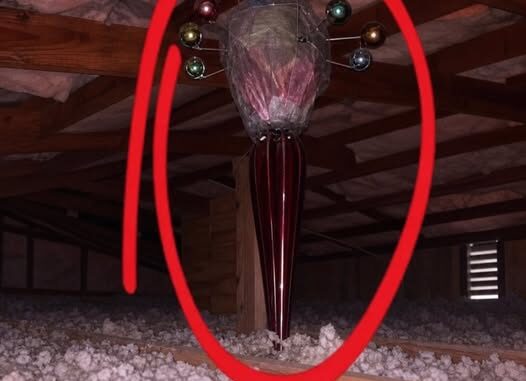
Attics have a way of making ordinary objects look mysterious. After years of dust, darkness, and neglect, familiar household items can become almost unrecognizable.
A tangled cord might resemble something alive. An old piece of furniture can look like a strange machine. A damaged lamp, tool, or box may seem completely unfamiliar at first glance.
Our minds naturally try to explain what we see, especially when the object is unexpected.
But before assuming you’ve discovered something unusual, take a moment to look more closely.
Pay attention to the details. Examine the material, shape, seams, screws, handles, hinges, labels, and markings. Sometimes a faded manufacturer’s name or a small mechanical feature is enough to reveal exactly what the object was designed to do.
Dust and poor lighting can also dramatically change how things appear. An item that looks unsettling from across a dark attic may seem completely ordinary once you pick it up and examine it in good light.
That’s why curiosity is often more useful than fear.
Instead of immediately deciding that an unfamiliar object is dangerous, mysterious, or valuable, start with simple questions:
- What material is it made from?
- Does it have moving parts?
- Are there labels, numbers, or markings?
- What other objects are stored nearby?
- Does its shape suggest a particular purpose?
- Does the object show signs of how it was used?
Old household items often tell their own stories through wear and construction. A worn handle may reveal where someone repeatedly gripped it. Scratches can show how it was operated. A particular type of screw or material can provide clues about its age.
If you’re still unsure, photograph the object from several angles and compare it with historical catalogs, repair manuals, museum collections, or reputable identification resources.
And remember: don’t handle an unknown object carelessly. If it appears damaged, contains an unknown substance, has exposed wiring, or could be hazardous, leave it where it is and seek appropriate expert advice.
Most attic discoveries, however, aren’t anything sinister.
They’re simply pieces of everyday life that have been forgotten.
A strange-looking tool may have once been essential to a household. An unfamiliar kitchen gadget might reveal how people prepared food decades ago. An old mechanical device could represent technology that disappeared long ago.
In that sense, an attic isn’t really a place filled with mysteries.
It’s an archive.
Every dusty object has the potential to tell a small story about the people who owned it, the work they did, and the way they lived.
So the next time something in an attic looks strange, resist the urge to create a frightening explanation.
Turn on the light. Take a closer look. Ask questions.
What first appears mysterious may simply be something ordinary that has been waiting patiently to be recognized again.
Leave a Reply