
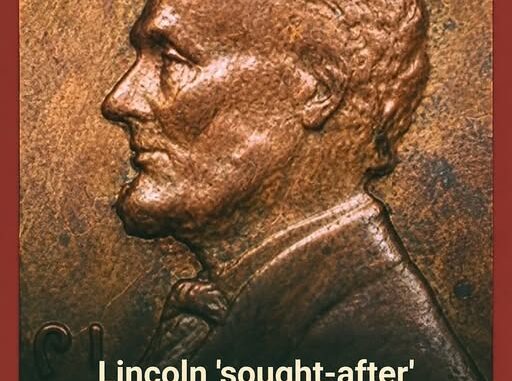
A handful of ordinary-looking pennies from the World War II era have become some of the most fascinating treasures in American coin collecting. Among them is the legendary 1943 Bronze Lincoln Cent, a rare minting error that has attracted collectors for decades and has brought extraordinary prices at auction.
At first glance, it may look like an old penny. But if an authentic example turns up, its historical importance and rarity can make it dramatically more valuable than its one-cent face value.
The story begins during World War II, when the United States was facing shortages of important industrial materials. Copper was particularly valuable because it was needed for military equipment and other wartime uses.
In 1943, the U.S. Mint changed the composition of the Lincoln cent, producing pennies primarily from zinc-coated steel rather than the traditional copper-based material.
That change created one of the most recognizable pennies in American numismatic history.
How Did Bronze Pennies Appear in 1943?
The transition to steel planchets was a major change for the Mint, but the process wasn’t completely free of mistakes.
A small number of bronze planchets from the previous production were apparently left behind and later entered the coining process. When some of those bronze blanks were struck with the 1943 Lincoln cent design, they produced coins that were never supposed to exist.
These accidental bronze cents became extremely rare.
Most 1943 Lincoln cents are easy to distinguish because they have a silver-gray appearance caused by their steel composition. The rare bronze examples, by contrast, have the familiar reddish-brown appearance associated with copper and bronze cents.
That difference in color is one of the reasons the coins have become so famous.
Why Are Collectors So Interested?
Coin collecting often revolves around rarity, history, condition, and authenticity. The 1943 Bronze Lincoln Cent checks several of those boxes at once.
It connects directly to a major moment in American history, represents an unusual minting error, and exists in extremely limited numbers.
The coin also carries the familiar portrait of Abraham Lincoln on the front, along with the date 1943. On the reverse is the traditional Lincoln cent design featuring the denomination and inscriptions associated with the era.
Nothing about the design immediately announces that the coin could be valuable.
That’s part of the fascination.
A rare coin can look surprisingly ordinary to someone who isn’t familiar with the details of American coinage. The difference may come down to the metal, the date, the mint mark, and other characteristics that collectors carefully examine.
The Famous “Could It Be in My Change?” Story
The 1943 Bronze Cent has inspired generations of treasure-hunting stories.
Because pennies circulate widely and can remain in collections, jars, drawers, and old coin boxes for decades, collectors have always been fascinated by the possibility of discovering an overlooked rarity.
However, finding a genuine 1943 Bronze Cent is exceptionally unlikely.
Many ordinary 1943 cents are made from steel, and numerous other coins have been altered, plated, or otherwise modified to resemble rare examples. That’s why simply finding a brown-colored 1943 penny isn’t enough to establish that it is a valuable bronze error.
Authenticity is critical.
What Makes Identification Difficult?
The biggest challenge is that valuable coins are often copied or altered.
A steel 1943 cent can potentially be given a different appearance through various forms of manipulation. At the same time, other Lincoln cents may be mistakenly identified as the famous bronze error because of their color or condition.
For that reason, collectors generally rely on professional examination rather than appearance alone.
Weight can also be an important clue because bronze and steel have different physical properties. But even measurements shouldn’t be treated as conclusive proof by themselves.
If someone believes they have discovered a potentially rare 1943 cent, the safest approach is to avoid cleaning, polishing, scratching, or otherwise altering the coin. Any attempt to improve its appearance can potentially reduce its collectible value.
Instead, the coin can be submitted to a reputable professional grading or authentication service.
What About the $336,000 Figure?
Some 1943 Bronze Lincoln Cents have sold for extremely high prices, including auction results reaching hundreds of thousands of dollars.
One widely reported example has been associated with a sale around $336,000, demonstrating just how valuable an authenticated specimen can become under the right circumstances.
But an important distinction is necessary: that figure does not mean every 1943 Lincoln penny is worth hundreds of thousands of dollars.
The value of a rare coin depends on several factors, including authenticity, condition, provenance, rarity, and market demand at the time of sale.
Even among rare coins, prices can vary considerably.
Could Another Example Still Be Out There?
The mystery surrounding the 1943 Bronze Cent has helped keep collectors interested for generations.
Only a very small number are known, and stories about additional examples that may have survived continue to capture attention. Claims about undiscovered specimens should be treated carefully, however, because many suspected examples turn out to be ordinary steel cents or altered coins.
That doesn’t make the search any less interesting.
Old coins frequently sit untouched in collections, inherited boxes, bank rolls, household containers, and forgotten drawers. Occasionally, an unusual coin can attract attention simply because someone takes the time to examine it more closely.
What Should You Look For?
If you’re sorting through old Lincoln cents, a 1943 penny may be worth a closer look. Pay attention to the date and overall appearance, but don’t assume that a bronze-colored surface automatically indicates a rare error.
The most important step is verification.
A genuine 1943 Bronze Lincoln Cent should have characteristics consistent with a bronze planchet, and professional authentication is essential before treating a suspected example as valuable.
And if you do happen to discover something unusual, resist the temptation to clean it. Collectors generally prefer coins in their original condition, and cleaning can leave permanent marks.
A Tiny Mistake That Became Numismatic History
The story of the 1943 Bronze Lincoln Cent is fascinating because it combines history, chance, and the unexpected consequences of a small production error.
Millions of pennies were produced during the war, yet only a tiny number of bronze examples from 1943 became famous among collectors.
Today, those coins serve as reminders that even mass-produced objects can sometimes become valuable pieces of history.
So, the next time you sort through an old collection of pennies, there’s nothing wrong with taking a closer look at the dates and unusual pieces. Just remember that genuine rare coins are exceptionally scarce, and any potentially valuable discovery should be professionally authenticated before assigning it a major value.
A penny may be worth only one cent—or, in extraordinarily rare circumstances, it can become a remarkable piece of American numismatic history.
Leave a Reply