
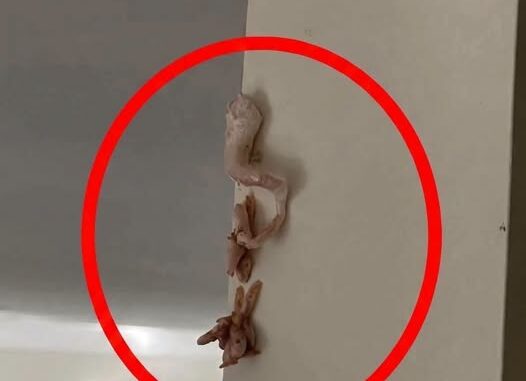
A strange, crunchy pink substance sticking out of a wall can look like something straight out of a horror movie. But before assuming you’ve discovered a hidden nest, fungus, or some mysterious growth, there may be a much simpler explanation: expanding spray foam insulation.
Spray foam is commonly used during construction and home repairs to seal gaps around pipes, windows, doors, electrical wiring, and other openings. Depending on the manufacturer, the product can come in several colors, including pink, yellow, blue, and orange. So, color alone isn’t enough to identify it.
Why Does It Look So Strange?
When spray foam is applied, it expands as it cures. If too much is used—or if it finds a small crack or opening—it can push outward through the wall.
Once exposed to air, the excess material hardens into an uneven, bubbly, sometimes crunchy-looking surface. If the installer didn’t trim it after it cured, it may remain protruding from the wall.
The location can offer an important clue. Foam around window frames, pipes, electrical penetrations, or door openings is much more likely to be construction material than something naturally growing inside the wall.
Don’t Touch an Unknown Substance Too Quickly
Even if you suspect the material is spray foam, it’s better to inspect it before grabbing or scraping it.
Uncured spray foam can irritate the skin and eyes, and its chemicals can produce fumes during application. If the substance is fresh, sticky, or giving off a strong chemical odor, avoid unnecessary contact and provide appropriate ventilation.
If you aren’t certain what you’re looking at, don’t assume it’s harmless simply because it resembles insulation.
Moisture Could Point to a Different Problem
One of the biggest clues is what the surrounding wall looks and feels like.
If you notice water stains, soft drywall, dampness, musty odors, or a patch that continues spreading, the problem may have nothing to do with spray foam.
Moisture can lead to mold growth and damage inside walls. In that situation, simply removing the visible material won’t solve the underlying problem. The source of the water needs to be identified and repaired first.
Could It Be Pests?
Occasionally, unusual material around a wall opening can also be associated with insects or other pests.
Nests, egg cases, droppings, and other pest-related debris can sometimes look surprisingly strange. Signs such as movement, small holes, scratching sounds, shed material, or repeated activity can provide additional clues.
If you see evidence of an infestation, getting a pest professional to inspect the area may be safer than pulling everything apart yourself.
What If It Really Is Spray Foam?
If the material is confirmed to be fully cured spray foam, the surrounding wall is dry, and there are no signs of pests or water damage, a small amount of excess foam can often be carefully trimmed back.
However, larger areas deserve more caution.
Walls containing fire-rated assemblies, electrical components, plumbing, or other important building systems shouldn’t be altered casually. In those situations, a qualified professional can determine whether the foam was installed appropriately and whether removing or covering it could create a safety or building-code issue.
Take Photos Before Removing Anything
If you encounter a strange substance emerging from a wall, documentation can make identification much easier.
Take photographs from several angles and note:
- Its color and texture
- Whether it feels hard, soft, or sticky
- Where it is located
- Whether there is a noticeable smell
- Whether the surrounding wall is damp
- Whether the material is getting larger
- Whether there are signs of insects or other pests
These details can help distinguish ordinary construction material from a moisture problem, pest activity, or something else entirely.
The Bottom Line
A bizarre-looking pink mass coming from a wall may be far less mysterious than it appears. Excess expanding spray foam is one possible explanation, especially around openings, pipes, windows, and other areas where insulation or sealing materials are commonly used.
But don’t rely on color alone. Check the surrounding area for moisture, damage, unusual odors, or signs of pests before deciding what you’re dealing with.
Sometimes the strange thing sticking out of your wall really is just leftover insulation.
And sometimes, that weird-looking patch is the first clue that something else inside the wall needs attention.
Leave a Reply