
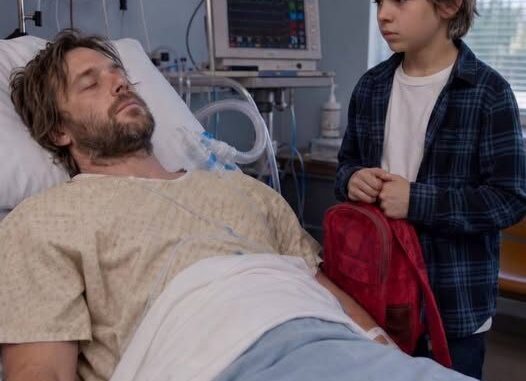
In the days that followed, the hospital room remained a place suspended between certainty and uncertainty. Nothing dramatic or immediate changed, but the energy surrounding David’s condition had shifted in a way that everyone could feel but no one could fully explain.
The medical team continued running tests, carefully tracking neurological responses and physical reflexes. While David’s condition was still classified as critical, the urgency that once surrounded the decision to withdraw life support began to soften. Instead of preparing for an ending, the staff shifted toward careful observation.
For Sophie, the experience became something she could only describe as emotional whiplash. One moment she had been preparing to say goodbye, and the next she was being told to wait. Not because recovery was guaranteed, but because the situation no longer felt as absolute as it had before.
And through all of it, Toby remained steady.
He continued sitting beside his father’s bed, speaking to him as if nothing had changed. There was no sense of doubt in him, no hesitation, no fear of silence. He simply believed that his father could still hear him.
The Power of Familiar Connection
What stood out to the hospital staff wasn’t just the recording Toby had played, but the consistency of his presence afterward. He didn’t treat it as a one-time moment of hope. Instead, he treated it as an ongoing conversation.
He would describe everyday things—what he saw outside the hospital window, stories from school, or simple plans for the future. Sometimes he would gently hold David’s hand while speaking, repeating a phrase that had become meaningful to him: “Three squeezes means you’re here.”
It wasn’t a medical instruction or a proven therapeutic method. It was something personal between a father and son, built from memory, imagination, and love.
Over time, small and subtle changes were observed in David’s responses. Nothing immediate or dramatic, but enough to encourage continued evaluation rather than withdrawal of care. His body showed occasional reflexive movements, and his condition remained stable enough that doctors decided not to proceed with any irreversible decisions.
Leave a Reply