
There are few household problems more annoying than a sink that suddenly decides it has had enough of draining water. One minute you’re washing dishes normally, and the next you’re standing there watching dirty water slowly rise instead of disappear. Glug… glug… glug. Fantastic.
Fortunately, many everyday sink clogs are caused by things like grease, food particles, soap residue, hair, and other debris—and a mild clog doesn’t always require an expensive plumber or a bottle of aggressive chemical drain cleaner. Simple household methods can sometimes loosen the buildup and get the water moving again.
The trick is knowing what kind of clog you’re dealing with and starting with the gentlest method. A greasy kitchen sink clog is a very different beast from a bathroom drain packed with hair.
Here are several methods worth trying before calling for professional help.
Before You Start: Figure Out What Kind of Clog You Have

Before dumping anything into your drain, take a moment to look at what the sink is doing.
If the water is still draining, but very slowly, you may be dealing with grease, soap residue, or a relatively small buildup. That’s when household methods are most useful.
If the sink is completely blocked, avoid continually adding more water. You’ll only create a larger pool of unpleasant mystery soup in your sink. Mechanical methods such as a plunger or drain snake are generally more useful for a solid blockage.
Also check whether the problem is isolated to one sink. If several drains in your home are backing up at the same time, the problem may be farther down the plumbing system rather than right underneath the sink.
And one very important rule: never mix homemade drain remedies with commercial chemical drain cleaners. Chemical residue can make plunging or opening the plumbing dangerous.
1. Dishwashing Detergent and Hot Water

If your kitchen sink is draining slowly and you suspect grease or oily buildup, dishwashing detergent is one of the simplest things to try.
Dish soap is designed to break up grease on plates and pans, so it makes sense that it can also help loosen a greasy film inside a drain. This method is particularly suited to minor kitchen-sink clogs rather than serious blockages. (Angi)
How to do it
- Remove as much standing water as possible if the sink is holding water.
- Pour a few tablespoons of liquid dish soap directly into the drain.
- Let it sit for several minutes so it can work its way toward the greasy buildup.
- Slowly pour very hot, but not necessarily boiling, water down the drain.
- Wait a few minutes and see whether the water begins draining more quickly.
- If necessary, repeat once.
If your plumbing contains PVC pipes, avoid pouring violently boiling water into the drain because extremely high temperatures can damage or deform some plastic plumbing. (Angi)
Best for: greasy kitchen sink buildup and slow drains.
Not ideal for: a completely blocked drain, large solid objects, or a bathroom drain packed with hair.
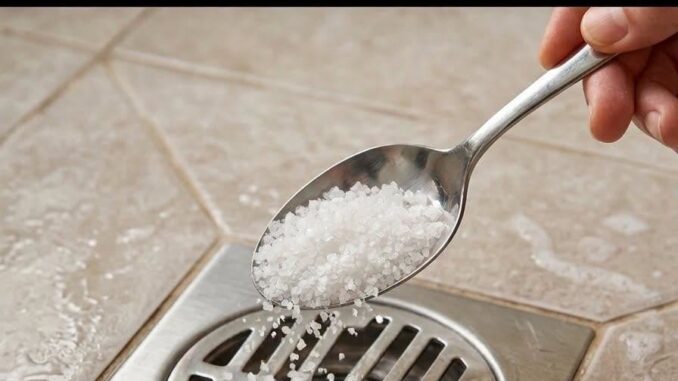
2. Salt and Hot Water

Salt has been a popular household drain remedy for years, and it’s certainly cheap enough to try.
The idea is simple: salt can provide some mild abrasive action while hot water helps loosen and carry away residue. However, don’t expect a bowl of salt to magically defeat a serious blockage. This is better thought of as a mild home remedy for minor buildup, not a replacement for a plunger or drain snake.
How to try it
- Pour approximately ½ cup of table salt into the drain.
- Follow it with very hot water.
- Let it sit for several minutes.
- Flush with more hot water.
If the drain is completely blocked and the water isn’t moving at all, don’t keep adding ingredients. Move on to a mechanical method instead.
Best for: minor residue and sluggish drains.
Reality check: salt isn’t a guaranteed clog remover, particularly when the blockage is caused by hair, a solid object, or a deep accumulation of grease.
3. Baking Soda and Vinegar

This is probably the most famous DIY drain-cleaning combination on the internet.
And yes, baking soda and vinegar really do react. When the alkaline baking soda meets acidic vinegar, they fizz and produce carbon dioxide. The bubbling can help loosen some light residue, while the ingredients can also help freshen an unpleasant-smelling drain.esn’t mean it will destroy every clog. A serious blockage deep inside a pipe isn’t going to politely surrender because you made a miniature volcano in the sink.
How to use it
- Remove any visible debris from the drain opening.
- Pour about ½ cup of baking soda into the drain.
- Add about ½ cup of white vinegar.
- Let the mixture fizz for around 10–15 minutes.
- Flush with hot water.
- Check whether the drainage has improved.
If it doesn’t work, don’t keep repeating the same process endlessly. A physical obstruction usually needs a physical solution.
Best for: light buildup, odors, and minor clogs.
Not ideal for: serious blockages or objects physically lodged in the pipe.
4. Use a Plunger

Sometimes the best solution isn’t hiding in your kitchen cupboard at all.
It’s sitting next to the toilet.
A plunger can be extremely effective on sink clogs because it uses pressure and suction to loosen the material physically rather than trying to dissolve it. It’s particularly useful when home remedies aren’t getting anywhere. (Angi)
For a sink, use a flat-bottomed cup-style plunger rather than the large flange-style toilet plunger.
How to plunge a sink
- Remove some standing water if there is too much.
- Make sure there is enough water in the basin to cover the rubber cup of the plunger.
- Place the plunger directly over the drain.
- Press down firmly to create a seal.
- Pump up and down several times.
- Pull the plunger upward and see whether the water starts moving.
- Repeat if necessary.
If you have a double kitchen sink, block the second drain with a stopper or wet cloth while plunging the first one. Otherwise, the pressure can escape through the other opening instead of attacking the clog. (JASMA)
Important: If you’ve already poured chemical drain cleaner into the sink, don’t start plunging. The chemical can splash back onto you.
5. Clean the Drain Strainer and Remove Visible Debris

Before reaching for any mixture, look directly at the drain.
You might discover that your supposedly mysterious plumbing disaster is actually a collection of food scraps, hair, soap residue, or other debris sitting right around the drain opening.
Remove the strainer or stopper if possible and clean it thoroughly. Wipe away the gunk around the opening with paper towels or a suitable brush.
For kitchen sinks, a drain strainer is especially useful because it catches food particles before they disappear into the plumbing. Preventing the debris from entering the pipe is much easier than trying to retrieve it later. (JASMA)
For bathroom sinks and showers, hair-catching strainers can similarly prevent hair from building up farther down the drain.
And yes, this part can be disgusting.
Wear gloves.
Nobody needs to discover what three months of drain archaeology looks like with their bare hands.
6. Try a Drain Snake for a Stubborn Clog

When the clog is deeper in the pipe, household ingredients may simply not be enough.
A drain snake, also called a drain auger, is designed to reach into the pipe and physically break up or pull out material causing the blockage. This is especially useful for hair and other solid debris that isn’t going to dissolve just because you poured vinegar on it.
For a simple sink clog, a small manual drain snake can sometimes do the job without professional equipment.
If you’re uncomfortable removing plumbing components or using a snake, however, there’s no prize for turning a small clog into a much larger plumbing disaster.
What You Should NOT Pour Down the Drain

The easiest clog to deal with is the one that never happens.
One of the biggest causes of kitchen sink blockages is grease and cooking fat. Even if liquid oil goes down the drain easily while warm, it can accumulate and contribute to blockages farther along the plumbing. (Angi)
Instead:
- Scrape food scraps into the trash.
- Wipe very greasy pans with paper towels before washing them.
- Collect used cooking oil and dispose of it appropriately rather than pouring it down the sink.
- Use a drain strainer to catch food particles.
- Don’t deliberately send coffee grounds, large food scraps, or other solids down the drain.
A few seconds of prevention can save you from standing over a sink full of disgusting water later.
How to Keep Your Sink From Getting Clogged Again

Once you’ve defeated the clog, don’t immediately forget about your drain until the next plumbing emergency.
A few simple habits can keep your sink flowing properly:
Wipe greasy dishes first
If a pan is coated in cooking oil or fat, wipe out as much as possible before washing it.
Use a drain strainer
It’s one of the easiest ways to stop food scraps and other debris from entering the plumbing in the first place.
Clean the stopper regularly
Even when water is flowing normally, residue can accumulate around the stopper and drain opening.
Don’t treat the drain like a garbage can
Your sink is designed to carry wastewater away—not every crumb left on your dinner plate.
Pay attention to slow drainage
A sink that takes longer and longer to drain is giving you a warning. Deal with a developing clog early rather than waiting until the water stops moving completely.
When It’s Time to Call a Plumber
DIY methods are great when they solve the problem. But sometimes your sink is simply telling you, “Nice try.”
It’s time to consider professional help if:
- The drain remains completely blocked after plunging.
- Multiple drains in the home are backing up.
- Water is coming back up through another drain.
- The clog keeps returning shortly after being cleared.
- You suspect a broken or damaged pipe.
- There’s a persistent sewage smell.
- You aren’t comfortable taking apart the plumbing underneath the sink.
A professional can inspect the P-trap and deeper sections of the drain and use equipment such as a drain snake when necessary.
And if several fixtures are backing up at once, don’t waste hours experimenting with increasingly creative kitchen chemistry. The blockage may be farther down the plumbing syste

A clogged sink doesn’t automatically mean an emergency plumber visit.
For a minor greasy kitchen clog, dish soap and hot water are a sensible first attempt. Baking soda and vinegar can be useful for light buildup and odors, while a plunger is a better choice when you need actual mechanical force. Salt can be tried as a mild household remedy, but it shouldn’t be treated as a miracle cure.
The most important thing is to start gently and escalate only when necessary. And remember that preventing grease, food scraps, hair, and other debris from entering the drain is ultimately much easier than fighting a full-blown clog.
So the next time your sink starts going glug… glug… glug…, don’t panic.
Your plumbing may just need a little help getting its life together. 
Leave a Reply