

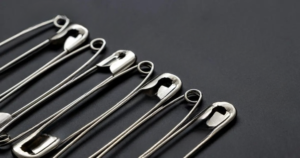
Safety pins are one of those everyday items most people use without giving much thought to their design.
Whether they’re fixing a torn shirt, securing fabric, helping with crafts, or serving as a quick emergency repair, safety pins have remained a household staple for generations.
But if you’ve ever looked closely, you may have noticed a small hole located near the coiled section of the pin.
Many people assume it’s simply part of the manufacturing process—or perhaps just a design detail. However, that tiny opening actually plays an important role in how a safety pin functions.
A Simple Tool With a Clever Design
At first glance, a safety pin appears straightforward: a piece of bent wire with a sharp point and a protective clasp.
Its design is simple, but every part serves a purpose.
The clasp protects users from the sharp end when the pin is closed, while the coiled section acts like a spring, allowing the pin to open and close repeatedly while maintaining tension.
Without that spring action, a safety pin wouldn’t stay securely fastened.
What Is the Tiny Hole For?
The small hole found near the coil helps support the spring mechanism that makes the safety pin work.
During manufacturing, the wire is shaped around this area to create the coil and maintain consistent tension. This tension allows the pin to return to its closed position after being opened.
In simple terms, the hole helps contribute to the structure that keeps the safety pin functioning reliably over time.
Why the Coil Matters
The coiled section isn’t just there to make the pin look different.
It serves several important purposes:
- Creates spring tension
- Helps the pin open and close smoothly
- Maintains pressure when fastened
- Increases durability through repeated use
Without the coil, the pin would lose much of its functionality.
A Brief Look at the History of the Safety Pin
The modern safety pin was invented in 1849 by Walter Hunt.
His design introduced the protective clasp and spring mechanism that are still used today. More than a century later, the basic design remains largely unchanged—a testament to its effectiveness.
More Than Just a Fastener
Over the years, safety pins have been used for much more than clothing repairs.
People have found countless creative uses for them, including:
- Sewing and crafting projects
- Organizing small items
- Temporary clothing adjustments
- Travel and emergency repair kits
- Jewelry and accessory projects
Their versatility is one reason they continue to be found in homes around the world.
Why Small Design Details Matter
Many everyday objects contain features most people rarely notice.
A tiny groove, notch, hole, or ridge can often serve an important purpose that improves performance, durability, or ease of use.
The safety pin’s small hole is a great example of how thoughtful engineering can be hidden within even the simplest household items.
The Bottom Line
The next time you use a safety pin, take a closer look at the tiny hole near its coil.
While it may seem insignificant, it’s part of the design that helps the pin maintain its spring action and function properly.
It’s a reminder that even the most ordinary tools often contain clever design details that make them far more useful than they appear at first glance.
Leave a Reply