
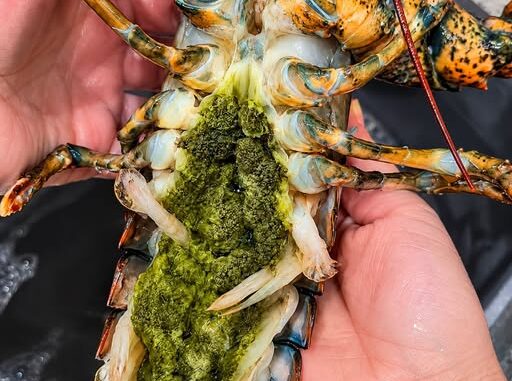
ntroduction: The Surprising Green Substance Inside a Lobster
Opening a freshly cooked lobster can be an exciting experience, especially for someone who enjoys seafood. The bright red shell, sweet meat, and rich aroma make lobster a favorite delicacy around the world. However, there is one unusual feature that often surprises first-time lobster eaters: a soft, green substance tucked inside the body.
At first glance, it might look unfamiliar or even unappetizing. Some people wonder whether it is fat, an undeveloped organ, or something that should never be eaten. Others recognize it as a traditional seafood delicacy and consider it one of the most flavorful parts of the lobster.
This green substance is called tomalley, and it has an important role in the animal’s digestive system. Although it has been enjoyed in various coastal cooking traditions for generations, tomalley also raises important questions about food safety.
Understanding what it is, why it appears green, and what health concerns may be associated with eating it can help seafood lovers make informed decisions.
What Exactly Is Lobster Tomalley?
Tomalley is the digestive gland of a lobster. It performs functions associated with both the liver and pancreas in humans, helping the animal digest food, absorb nutrients, and process substances entering its body.
Unlike the human digestive system, which has several distinct organs with specialized functions, a lobster’s digestive gland carries out multiple important tasks in one structure.
As the lobster consumes food, the gland helps break down nutrients and supports the body’s metabolism. Its color can range from pale green to dark olive, depending on factors such as the animal’s diet, condition, and other biological variations.
The green appearance is natural and does not automatically indicate that the lobster is spoiled. However, color alone cannot establish whether seafood is safe to eat.
Tomalley is also different from the eggs found in female lobsters. Lobster roe, often called coral because of its reddish color when cooked, consists of reproductive material. Tomalley, by contrast, is an internal digestive organ.
Knowing the difference can make preparing and eating lobster less confusing, particularly for people encountering these parts of the animal for the first time.
Why Do Some People Consider Tomalley a Delicacy?
For many seafood enthusiasts, tomalley offers a distinctive flavor that differs from the sweet, firm texture of lobster tail and claw meat.
Its consistency is usually soft and creamy, while its taste can be rich, savory, and strongly reminiscent of the sea. Some diners enjoy spreading a small amount over bread, mixing it into sauces, or incorporating it into traditional seafood dishes.
In certain culinary traditions, cooks have used tomalley to enrich lobster sauces, soups, and other preparations. Its concentrated flavor can add depth to a dish without requiring large quantities of additional ingredients.
However, not everyone enjoys it. Some people find the flavor too intense, while others prefer the familiar texture of lobster meat. Personal preference plays a significant role in whether tomalley is considered a delicacy or simply an ingredient to leave aside.
There is no culinary requirement to eat it. The tail, claws, and other edible portions provide plenty of opportunities to enjoy lobster without consuming the digestive gland.
The Important Food-Safety Question
Although tomalley has a long culinary history, its role in processing substances from the lobster’s diet also makes it a potential site for the accumulation of certain contaminants.
Depending on environmental conditions, the digestive gland may contain higher concentrations of some pollutants or naturally occurring marine toxins than the lobster’s muscle meat.
One particular concern is exposure to toxins produced by certain species of microscopic algae. Under suitable environmental conditions, these organisms can multiply rapidly, creating harmful algal blooms. Some blooms produce toxins that can enter the marine food chain.
Lobsters and other marine animals may be exposed to these substances through their feeding environment. Certain toxins can accumulate in internal tissues, including the digestive gland.
The risk varies according to the toxin involved, local environmental conditions, and the seafood harvested from the affected area. Consequently, it would be inaccurate to assume that every lobster contains dangerous levels of toxins. It would be equally unwise to assume that tomalley is always safe simply because it looks normal or comes from a familiar seafood market.
Can Cooking Make Tomalley Safe?
Cooking is essential for preparing lobster properly, but it does not eliminate every possible food-safety hazard.
Heat can destroy many harmful microorganisms when seafood is cooked appropriately. However, certain marine biotoxins are resistant to ordinary cooking temperatures. Boiling, steaming, or frying cannot reliably remove all such toxins once they are present.
This distinction is important because a lobster may appear fresh, smell normal, and be thoroughly cooked while still containing a substance that cooking cannot neutralize.
For this reason, local seafood advisories and official public-health guidance deserve particular attention. When authorities issue warnings about marine toxins or harvesting areas, consumers should follow the relevant recommendations rather than relying on appearance, smell, or cooking methods.
A reputable seller can help provide information about the source of seafood, but purchasing from an established retailer does not guarantee that every internal organ is free of contaminants.
What Are the Potential Health Risks?
The possible risks depend on the type and amount of contaminant involved.
Certain marine toxins can cause gastrointestinal symptoms, while others may affect the nervous system. In serious cases, exposure to specific marine biotoxins can lead to dangerous neurological complications.
It is important not to confuse these toxin-related concerns with ordinary digestive discomfort. Feeling unwell after eating seafood does not automatically identify the cause, and symptoms alone cannot confirm whether tomalley was responsible.
Anyone who develops concerning symptoms after eating seafood should seek appropriate medical advice. Severe symptoms, including difficulty breathing, weakness, confusion, or significant neurological changes, require urgent medical attention.
Because individual risk can vary, people who want to minimize potential exposure may choose to avoid tomalley altogether. This is a reasonable precaution, especially when information about the lobster’s harvest location or local seafood safety conditions is limited.
How to Enjoy Lobster More Safely
Lobster can remain a delicious part of a balanced diet when it is purchased, stored, and prepared appropriately.
Consider these practical precautions:
- Choose reputable suppliers. Purchase seafood from sellers who follow appropriate handling and storage practices.
- Check local advisories. Pay attention to official warnings concerning marine biotoxins, harmful algal blooms, and seafood harvested from particular coastal areas.
- Handle seafood properly. Keep raw lobster refrigerated, avoid cross-contamination, and cook it thoroughly.
- Consider leaving the tomalley uneaten. Removing the digestive gland is a straightforward way to avoid consuming a tissue that may concentrate certain contaminants.
- Do not rely on appearance alone. A normal color, pleasant smell, or fully cooked appearance cannot establish that seafood contains no marine toxins.
These measures help reduce avoidable risks while allowing diners to enjoy the portions of lobster they prefer.
Why Awareness Matters More Than Fear
Food traditions often develop through generations of experience. In coastal communities, using different parts of seafood has historically reflected culinary creativity, local customs, and a desire to make the most of available ingredients.
Modern food-safety knowledge adds another dimension to those traditions. Scientists can identify hazards that may not be visible to the eye, while monitoring programs help authorities determine when certain seafood products or harvesting areas present concerns.
That does not mean traditional dishes must automatically be rejected. Instead, it means culinary enjoyment can be balanced with a better understanding of potential risks.
Tomalley illustrates this balance particularly well. It can be valued for its flavor while still deserving more caution than ordinary lobster muscle meat.
Conclusion: The Green Secret Inside Your Lobster
The green substance inside a lobster is not a mysterious parasite or an unusual cooking accident. It is tomalley, a digestive gland that helps the animal process food and nutrients.
For some people, its creamy texture and concentrated seafood flavor make it a treasured culinary ingredient. For others, it is something they would rather leave on the plate. Both preferences are understandable.
The more important consideration is food safety. Because certain contaminants and naturally occurring marine toxins can accumulate in the digestive gland, tomalley is not always equivalent to the lobster meat most people eat. Proper cooking does not reliably destroy every marine toxin, making awareness of local advisories especially important.
Ultimately, enjoying seafood responsibly means understanding what is being served, considering the available safety information, and making choices based on reliable guidance rather than appearance alone.
The next time you open a lobster and discover that distinctive green substance, you will know what it is, why it exists, and why some seafood lovers approach it with enthusiasm while others prefer to avoid it. Sometimes, the most interesting part of a meal is not simply its flavor, but the knowledge that helps us enjoy it wisely.
Leave a Reply