
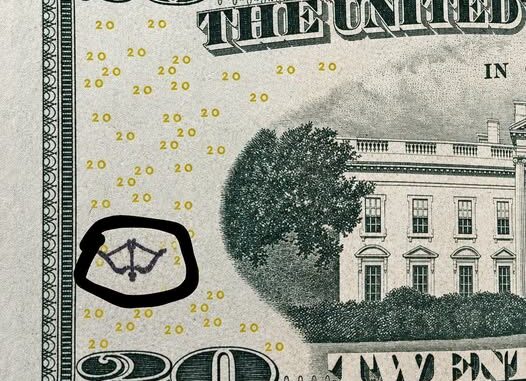
If you have ever examined a U.S. paper bill closely, you might have spotted an unexpected detail: a tiny stamped symbol, a set of initials, or a small emblem like a bow and arrow. These markings are known as chop marks. Rather than damage or random vandalism, these stamps tell a story about international commerce, currency validation, and global trust in the U.S. dollar.
What Are Chop Marks?
A chop mark is a small ink stamp applied to paper currency by international money changers, financial institutions, or merchants. They are most commonly found on U.S. bills circulating in regions such as Southeast Asia, Africa, and Latin America.
Because counterfeiting remains a major concern in many foreign markets, money handlers use these stamps as a personal guarantee of authenticity. When an experienced money changer examines a bill and confirms it is genuine, they apply their unique mark before passing it along.
Essentially, a chop mark signals to future handlers: “This bill has been inspected and verified as authentic.”
The Origin of the “Chop” Tradition
The practice traces back centuries to China. To ensure the purity and weight of silver coinage, Chinese merchants stamped metal coins with unique symbols called “chops.” Over time, as paper currency became the primary medium for global trade, the tradition adapted to paper bills—especially the U.S. dollar, which functions as the primary global reserve currency.
In economies where formal banking systems are weak or regional trust in paper money is low, these physical stamps provide a crucial layer of informal security.
       [ U.S. Dollar Circulates Internationally ]
                         │
                         ▼
        [ Received by Foreign Money Changer ]
                         │
                         ▼
       [ Inspected for Counterfeit Markers ]
                         │
                         ▼
     [ Stamped with Unique "Chop Mark" Symbol ]
                         │
                         ▼
       [ Re-enters Local & Global Commerce ]
Key Functions of Chop Marks
-
Authentication: Serves as a quick visual confirmation that the bill passed basic security checks.
-
Traceability: Helps merchants track currency movement within informal financial networks.
-
Building Local Trust: Allows trade to move smoothly in markets where advanced bill-testing equipment is unavailable.
Common Designs and Symbols
Chop marks are typically small and stamped in red, black, or blue ink so they do not obscure critical security features (such as watermarks or serial numbers).
| Design Type | Examples | Primary Purpose |
| Icons & Symbols | Bow and arrow, stars, birds, geometric shapes | Unique visual identity for individual money changers |
| Initials & Letters | Stylized alphanumeric characters | Represents specific exchange houses or brokers |
| Regional Stamps | Local symbols or character-based marks | Identifies origin within specific trading hubs |
Legal Status and Banking Acceptance
Under U.S. currency laws, defacing money to the point of altering its value or denomination is illegal. However, standard chop marks generally do not invalidate a bill as legal tender because they leave the structural integrity and core design features intact.
Note for Currency Handlers: While chop marks do not make a bill counterfeit, bills with excessive or heavy ink marks may occasionally be rejected by automated currency counters, ATMs, or strict commercial banks.
Summary
The bow and arrow symbol—and thousands of other chop marks like it—serves as a silent record of a bill’s journey through the global economy. These tiny stamps demonstrate how U.S. currency bridges international borders, enabling reliable financial exchanges far beyond the shores of the United States.
Leave a Reply