
During the Victorian era, personal accessories were often about much more than fashion. The objects people carried, wore, and displayed could reflect their tastes, social customs, and appreciation for craftsmanship.
Among the fascinating examples from this period are antique silver purses.
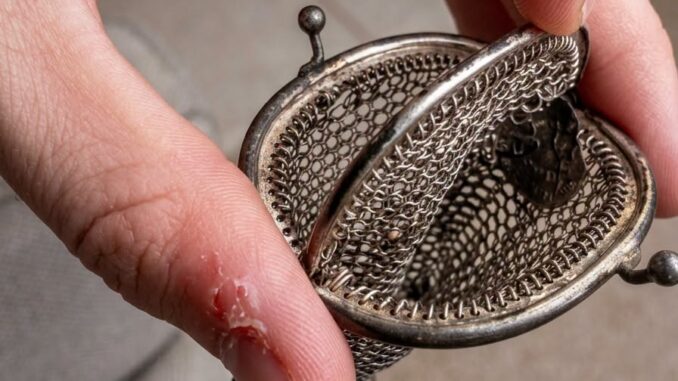
Small enough to carry in the hand but often decorated with remarkable detail, Victorian silver purses combined practicality with decorative artistry. Today, surviving examples offer collectors and history enthusiasts an interesting glimpse into everyday life during the 19th century.
Crafted With Remarkable Attention to Detail
Silver was widely used for decorative and functional objects during the Victorian period, and purses were no exception.
Many surviving examples feature elaborate workmanship, including engraved flowers, raised patterns, scrolling designs, geometric details, and motifs inspired by nature. Some pieces also reflect artistic influences that were popular during different stages of the Victorian era.
Floral decorations were especially common, while other designs incorporated birds, leaves, animals, architectural elements, or decorative borders.
The craftsmanship could extend to even the smallest parts of the purse. Clasps, frames, chains, and handles were sometimes decorated with intricate metalwork or ornamental details.
Because designs varied considerably, no two antique purses necessarily look alike. Their appearance could depend on when they were made, where they were produced, and the preferences of the original owner.
Beauty Combined With Function
Although these purses were decorative, they were still practical objects.
Depending on their design and size, a silver purse could hold coins, small personal items, calling cards, or other necessities. Some had fabric interiors, while others used flexible metal mesh that allowed the purse to expand when filled.
Certain examples were designed to be carried by hand, while others could be attached to a chain or suspended from clothing.
The purse therefore served two purposes at once: it was useful for carrying belongings and also formed part of a carefully coordinated outfit.
This combination of function and decoration was common in Victorian design. Everyday objects were frequently given decorative treatment, turning ordinary household and personal items into expressions of craftsmanship.
Fashion and Social Customs
Victorian society placed considerable importance on clothing and presentation.
For formal occasions, accessories could contribute significantly to an individual’s overall appearance. A carefully chosen purse, brooch, necklace, fan, or pair of gloves could complement an outfit and demonstrate attention to detail.
An ornate silver purse could therefore be appreciated not only for its usefulness but also for its appearance.
However, it is important not to assume that every silver purse belonged to an exceptionally wealthy person. Silver objects were produced in many styles and price ranges, and ownership varied according to period, location, design, and individual circumstances.
What can be said with more confidence is that these accessories reflected the Victorian appreciation for decorative craftsmanship.
Gifts and Personal Memories
Small accessories were also suitable gifts for important occasions.
A silver purse could be associated with a birthday, wedding, anniversary, holiday, or other personal milestone. When an object was kept within a family, its sentimental importance could eventually become greater than its original purpose.
An inherited purse may carry memories of the person who once owned it, even when little is known about its original history.
This is one reason antique accessories can be so fascinating today. The physical object may survive long after the original owner is gone, creating a tangible connection between different generations.
Marks of use can even become part of the item’s story. A worn clasp, faded lining, small scratches, or changes in the surface may reveal that the object was actually used rather than simply stored away.
What Collectors Look For Today
Modern collectors are often interested in Victorian silver purses for several different reasons.
The design itself can be appealing, particularly when the piece demonstrates high-quality craftsmanship. Historical significance, condition, maker’s marks, age, materials, and provenance can also influence how collectors evaluate an antique.
Silver hallmarks may provide useful information about the metal, manufacturer, and place or period of production, although identifying antique pieces accurately can require specialist knowledge.
A purse with an interesting history or documented ownership may be particularly appealing to collectors.
At the same time, an antique should not be judged solely by its appearance. Professional evaluation can be helpful when authenticity, age, materials, or value are uncertain.
A Window Into Victorian Life
Perhaps the most interesting aspect of these purses is what they reveal about everyday life.
A small accessory can tell us about changing fashions, manufacturing techniques, social customs, and attitudes toward personal possessions.
It also demonstrates how closely beauty and usefulness were connected in Victorian design.
Today, we often think of historical objects as museum pieces, but many of these items were originally made to be used. People carried them to social gatherings, visits, performances, celebrations, and other events that formed part of everyday life.
That connection between ordinary use and artistic craftsmanship makes surviving examples particularly interesting.
A Small Object With a Long Story
The Victorian silver purse may be small, but its history is surprisingly rich.
It represents the creativity of craftsmen, the changing fashions of the 19th century, and the personal habits of the people who carried these accessories. Some became treasured family possessions, while others eventually found their way into antique collections.
More than a century later, these purses continue to attract attention because they combine history, design, and human stories in a single object.
They remind us that the past is not preserved only in grand buildings and famous paintings. Sometimes, history survives in the smallest possessions—an old purse, a worn clasp, or a carefully engraved piece of silver that once belonged to someone living an entirely different life.
That is what makes Victorian accessories so fascinating. They were created for everyday moments, yet today they offer a remarkable glimpse into the world that produced them.
Leave a Reply