
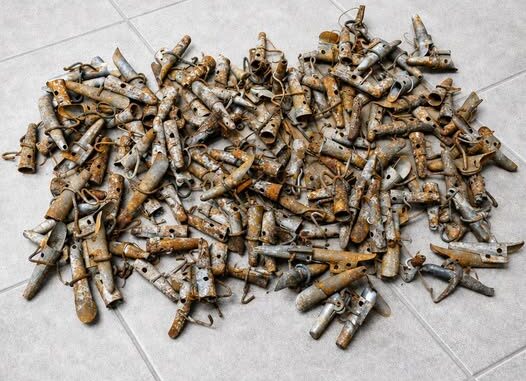
Finding a bucket filled with unfamiliar metal objects in the attic of an old house can be surprisingly intriguing. At first, these small fittings might look like discarded plumbing parts, pieces of old machinery, or random hardware that was forgotten decades ago.
But if they have the shape and features shown in the photo, they may actually be maple sap taps, commonly known as spiles.
These simple tools were traditionally used to collect sap from maple trees, which could then be processed into maple syrup.
What Exactly Is a Maple Spile?
A spile is a small tube or metal fitting designed to be placed into a hole drilled into the trunk of a maple tree.
Its purpose is straightforward: it provides a controlled route for the tree’s sap to leave the trunk and directs that sap into a collection container.
Traditional spiles were commonly made from metal, although later versions were also produced from materials such as plastic. Depending on the design and period, some were made to support a bucket directly beneath the tap, while others were designed to connect to tubing.
In simple terms, you can think of a traditional spile as a tiny faucet attached to a tree.
Without one, sap leaving the drilled hole would simply run down the bark, making collection much more difficult and increasing the chance of contamination.
Why Does Maple Sap Flow?
Maple sap collection depends on a particular combination of weather conditions.
During late winter and early spring, maple trees can experience repeated freezing and thawing. When temperatures fall below freezing, physical changes inside the tree help create pressure. When temperatures rise above freezing during the day, that pressure can push sap through the tree and out through a properly drilled tapping hole.
This is why maple sugaring has traditionally been a seasonal activity.
If temperatures remain too cold, sap flow can be limited. If the weather becomes consistently warm, the traditional sap-flow season comes to an end.
The spile itself does not make the sap flow. Instead, it provides a convenient pathway for collecting sap that is already being moved by the tree’s natural pressure changes.
How Were These Metal Taps Used?
The traditional process was relatively simple.
A small hole was carefully drilled into a suitable maple tree. The spile was then placed into the opening, generally fitting snugly enough to remain in position.
A bucket could be hung underneath the spile to collect the dripping sap.
In larger or more modern operations, tubing can instead be connected to the tap. The tubing transports sap from multiple trees toward a collection tank, reducing the amount of manual bucket collection required.
Older maple-syrup operations, particularly small family farms and traditional sugar bushes, commonly relied on individual buckets hanging from trees.
If the objects in the attic are genuine old-style spiles, finding a large quantity of them together could indicate that someone associated with the property once participated in maple sap collection.
Why Would There Be a Whole Bucket of Them?
There are several possible explanations.
The previous owners may have made maple syrup as a seasonal activity. The property might once have been part of a farm, or someone living there may simply have collected sap from nearby maple trees as a hobby or source of supplemental income.
Because spiles are small, sturdy, and reusable, storing them together in a bucket or container would have been practical.
After the tapping season ended, the equipment could simply be cleaned, removed from service, and stored until the following year.
Of course, the objects alone cannot prove exactly what happened at the property. Their presence is simply a clue that may point toward an earlier maple-sugaring operation.
Older Bucket Taps and Modern Tubing Systems
Maple-tapping equipment has changed considerably over time.
Traditional bucket systems generally used simple metal spiles that allowed sap to drip directly into a container hanging from the tree. These systems were labor-intensive because the buckets had to be checked and emptied regularly.
Modern maple operations often use tubing systems. Rather than collecting sap individually at every tree, tubing carries sap from multiple taps to a larger collection point.
Some modern systems also use vacuum technology to improve sap collection efficiency.
The basic principle, however, remains the same: a carefully made tapping hole provides access to the sap, and a tap or spile directs it into a collection system.
Sap Isn’t the Same Thing as Maple Syrup
One of the most interesting parts of the process is that the liquid collected from a maple tree is not maple syrup yet.
Fresh maple sap is mostly water and contains a relatively small amount of naturally occurring sugar. It is generally thin and much less concentrated than the syrup sold in stores.
To produce maple syrup, the collected sap must be concentrated, traditionally by boiling away a large portion of its water.
The exact amount of sap required varies depending on the sugar concentration of the sap and other conditions, but a commonly used rule of thumb is around 40 liters of sap for approximately 1 liter of finished syrup.
That means producing even a modest amount of syrup can require collecting and processing a surprisingly large quantity of sap.
Does Tapping Hurt Maple Trees?
When maple trees are tapped using appropriate equipment and responsible practices, tapping does not normally mean that the tree has to be cut down or permanently damaged.
A tapping hole is relatively small, and healthy trees can compartmentalize and gradually grow over the affected area.
However, that does not mean trees can be tapped without limits. The number and placement of taps should be appropriate for the tree’s size and health, and tapping practices should follow established guidelines.
Poor tapping techniques, excessive tapping, or damaging the tree unnecessarily can cause problems.
For that reason, modern maple producers generally follow specific recommendations regarding tap size, depth, placement, and the number of taps used on an individual tree.
A Small Piece of Agricultural History
Objects like these can seem completely mysterious when discovered decades after they were last used.
Today, most people encounter maple syrup as a finished product in a bottle at a grocery store. Finding the equipment used at the very beginning of that process provides a glimpse into an older way of producing food.
Before modern tubing systems and specialized equipment became widespread, collecting maple sap could involve hundreds of individual buckets, regular trips through the woods, and hours of boiling.
A simple metal spile represents just one small part of that process.
So, What Are Those Strange Metal Objects?
If the objects in the photograph match the typical design of traditional maple-tapping hardware, they are likely maple sap spiles, or taps.
They were inserted into carefully drilled holes in maple trees to provide a controlled path for sap to flow into buckets or collection systems.
Finding an entire bucket of them in an old attic could therefore be a fascinating clue about the property’s past. Someone who lived there—or who used the property—may once have collected maple sap and produced syrup.
What initially looks like a collection of worthless metal scraps may actually be a set of practical tools connected to a long-standing agricultural tradition.
If the house is located in an area where maple trees are common, the discovery becomes even more plausible. Before throwing the pieces away, it may be worth cleaning them carefully, photographing them, and comparing their shapes with historical maple-tapping equipment. They could be a small but interesting piece of the property’s history.
Leave a Reply