

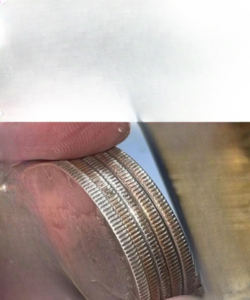
Most of us handle coins every day without giving much thought to their design. However, one small detail has served an important purpose for centuries: the tiny ridges found around the edges of many coins.
These grooves, known as reeded edges, were originally introduced to help protect the integrity of coins made from precious metals such as gold and silver.
Preventing Coin Clipping
Centuries ago, many coins were worth the value of the metal they contained. Because of this, some people would shave tiny amounts of metal from the edges of coins—a practice known as coin clipping.
Although each shaving was small, collecting enough precious metal over time could be profitable. The altered coins often remained in circulation, making the problem difficult to detect.
To discourage this practice, mints began producing coins with ridged edges. If someone removed even a small amount of metal, the evenly spaced grooves would be interrupted, making the alteration much easier to notice.
Why Are Ridges Still Used Today?
Although most modern coins are no longer made primarily from precious metals, ridged edges continue to serve several useful purposes.
They help distinguish different denominations, improve the accuracy of coin-sorting and vending machines, and make it easier for people to identify certain coins by touch.
In many countries, only selected denominations have reeded edges, while others remain smooth. This difference helps users quickly tell coins apart without looking closely.
A Simple Yet Effective Design
The ridged edge is a good example of how a small design feature can solve multiple problems at once.
Rather than relying on complex technology, it uses a simple physical pattern to discourage tampering while also improving usability.
Even after hundreds of years, the same basic idea continues to be part of modern currency around the world.
More Than Just Decoration
The next time you hold a coin, take a closer look at its edge.
Those tiny grooves aren’t just decorative—they’re the result of practical engineering that has helped protect currency, improve identification, and make everyday transactions a little more reliable.
Sometimes, the most effective designs are also the simplest, quietly serving their purpose without most of us ever noticing.
Leave a Reply