
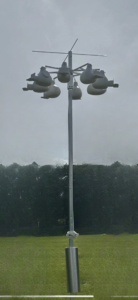
If you’ve recently visited a local park and noticed tall poles topped with clusters of white, pod-like structures, you may have wondered what they are. At first glance, they can resemble weather instruments, lighting equipment, or monitoring devices. However, these unusual structures serve a very different purpose.
They are specially designed nesting houses for purple martins, a migratory bird species known for its graceful flight and social nesting habits. These structures help provide safe nesting locations and support ongoing wildlife conservation efforts in communities across North America.
Meet the Purple Martin
Purple martins are the largest swallows in North America and are well known among bird enthusiasts. Their dark feathers often appear black from a distance but reveal a rich blue-purple sheen in sunlight.
These birds spend much of their time in flight, feeding on flying insects and performing impressive aerial maneuvers. Each year, they migrate thousands of miles between North and South America, returning in spring to breed and raise their young.
One of the most distinctive traits of purple martins is their preference for nesting in colonies. Rather than nesting alone, they thrive in communities where multiple pairs can live close together.
Why Do Purple Martins Use Artificial Housing?
Historically, purple martins nested in natural cavities found in dead or aging trees. Over time, changes in land use and development reduced the number of suitable nesting sites available in many areas.
As natural nesting locations became less common, purple martins increasingly adapted to using human-provided housing. Today, many populations in eastern North America rely heavily on specially designed nesting structures placed by bird enthusiasts, conservation groups, and park managers.
This long-standing relationship between people and purple martins has helped support the species while also creating opportunities for wildlife observation and education.
Why Are the Nesting Houses Shaped Like Gourds?
The gourd-shaped design is based on a tradition that dates back generations. Early settlers and Indigenous communities often used hollowed gourds as nesting sites for martins, and modern designs continue to follow a similar concept.
These structures offer several practical benefits:
- Protection from many common predators
- Comfortable nesting space for adult birds and chicks
- Good ventilation during warmer weather
- Drainage that helps keep nests dry
Mounted high above the ground, the gourds create a safer environment for nesting colonies.
How These Structures Support Conservation
The primary purpose of purple martin housing is to provide secure nesting opportunities where natural sites may be limited.
By installing and maintaining these structures, communities can help:
- Support local bird populations
- Encourage successful breeding seasons
- Promote wildlife conservation awareness
- Create opportunities for birdwatching and environmental education
Many parks include these nesting stations as part of broader efforts to support native wildlife and maintain healthy ecosystems.
What You Might Notice in the Park
A typical purple martin station often includes multiple gourd-shaped nesting chambers arranged around a central pole. This design reflects the birds’ natural preference for colony living.
Many installations also feature:
Adjustable Pole Systems
Some poles can be raised or lowered for routine maintenance, nest monitoring, and seasonal cleaning.
Protective Pole Guards
Smooth metal barriers are often installed near the base of the pole to discourage climbing animals from reaching the nests.
Multiple Nesting Compartments
Each gourd serves as a separate nesting space, allowing many bird families to occupy the same structure.
A Closer Look at Community Wildlife Efforts
What may initially appear to be a piece of unfamiliar equipment is actually an example of a simple but effective conservation tool. These nesting structures provide important support for purple martins while giving park visitors a chance to observe one of North America’s most interesting migratory birds.
The next time you see a tall pole covered with white gourd-shaped containers, you’ll know it’s not a surveillance device or weather station. It’s a carefully designed home that helps support local wildlife and encourages future generations of purple martins to return year after year.
Leave a Reply