
Yard sales are full of surprises. Most people expect to find old furniture, forgotten tools, vintage decorations, or boxes of household items. Every once in a while, however, someone comes across an object that leaves them completely puzzled.
That was exactly the situation when this unusual machine was discovered at a yard sale.
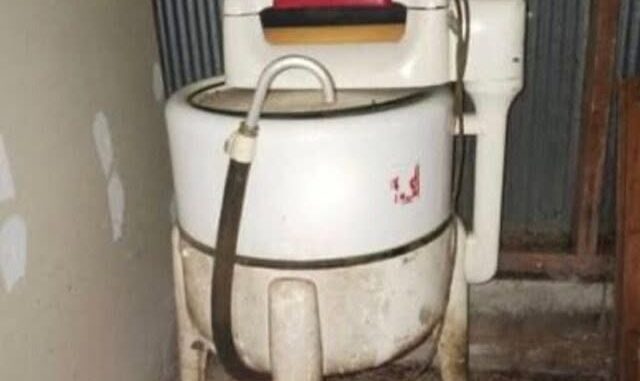
At first glance, it looks like some kind of industrial appliance. It has a large metal drum, sturdy legs, a motor attached to the side, and what appears to be a hose or belt hanging from the front. The design seems old-fashioned, and many younger people have never seen anything quite like it before.
So what is it?
The answer is surprisingly simple: it is an old washing machine.
A Glimpse Into Household History
Before modern automatic washers became common in homes, laundry was a much more time-consuming task. Washing clothes often required significant physical effort, and families relied on machines like this one to make the process easier.
Machines of this style became popular during the mid-20th century, especially in rural communities and households that wanted a more efficient alternative to washing clothes by hand.
Although they may look unusual today, these machines represented a major advancement in home technology at the time.
How These Early Washing Machines Worked
Unlike modern washers that automatically fill, wash, rinse, and spin with the press of a button, older washing machines required much more involvement from the user.
The basic process typically included:
- Filling the tub with water manually
- Adding soap or detergent
- Loading clothing into the drum
- Running the agitator to clean the clothes
- Draining the water
- Refilling for rinsing
- Using a wringer or spin mechanism to remove excess water
Many families spent hours each week doing laundry, and machines like this helped reduce some of the labor involved.
Why the Design Looks So Different
Modern washing machines are enclosed inside sleek cabinets, hiding most of the mechanical components.
Older models, however, were designed with function as the top priority.
Features often included:
Large Open Tub
The main drum held water and clothing during the washing process. Many were made from porcelain-coated steel to resist rust and improve durability.
Electric Motor
The motor powered the agitator inside the tub. This helped move clothing through the soapy water to remove dirt and stains.
Drain Hose
The hose allowed users to empty dirty water after washing and rinsing cycles.
Heavy-Duty Frame
These machines were built to last. Many were constructed from thick metal and sturdy components that could survive decades of use.
Why So Many Older Machines Are Still Around
One reason people continue finding these machines in barns, garages, and yard sales is their incredible durability.
Unlike many modern appliances that rely heavily on electronics, older washers were built with simple mechanical systems.
This made them:
- Easier to repair
- Less dependent on replacement parts
- More resistant to electrical failures
- Capable of lasting for decades
In some rural areas, families continued using machines like these long after newer models became available.
A Favorite Among Collectors
Vintage appliances have become increasingly popular among collectors and antique enthusiasts.
Many people enjoy restoring old household equipment because it offers a tangible connection to everyday life in previous generations.
Collectors often seek:
- Vintage washing machines
- Antique refrigerators
- Early kitchen appliances
- Historic farm equipment
- Mid-century household items
A well-preserved machine can become an interesting display piece and conversation starter.
What Makes This Particular Machine Interesting?
The machine shown in the photograph appears to feature a top-loading design with an attached motor unit.
The rounded tub and sturdy construction suggest it may date back several decades.
While identifying the exact manufacturer would require closer inspection of any labels or serial numbers, machines with similar designs were produced by various companies throughout the mid-1900s.
The overall condition suggests it has spent considerable time in storage, which is common for appliances of this age.
Could It Still Work?
Surprisingly, some vintage washing machines remain operational after many years.
Whether this particular machine could still function would depend on several factors:
- Condition of the motor
- Integrity of wiring
- Rust or corrosion damage
- Condition of seals and moving parts
- Availability of replacement components
Anyone considering restoration should have the machine inspected carefully before attempting to operate it.
Why Older Household Items Fascinate People
Objects like this generate curiosity because they offer a glimpse into how everyday tasks were once performed.
Today, doing laundry often involves little more than pressing a few buttons.
Decades ago, however, washing clothes required significantly more effort and planning.
Looking at an old appliance helps people appreciate how much household technology has evolved over time.
It also reminds us that innovations we now take for granted were once considered groundbreaking.
The Growing Popularity of Vintage Finds
Social media and online marketplaces have sparked renewed interest in unusual antique discoveries.
Many people enjoy sharing photos of mysterious objects they uncover at:
- Yard sales
- Estate sales
- Flea markets
- Antique stores
- Family properties
- Old barns and sheds
Part of the excitement comes from solving the mystery of what an item was originally used for.
Sometimes the answer reveals a fascinating piece of history hiding in plain sight.
More Than Just an Old Appliance
While this machine may appear outdated today, it represents an important chapter in the evolution of household living.
For families of its era, appliances like this saved countless hours of hard work and made daily life more manageable.
What now looks like an odd metal drum on legs was once considered modern convenience.
That perspective helps explain why many vintage appliances continue to capture people’s imagination decades after they were built.
Final Thoughts
If you found this machine at a yard sale and wondered what it was, you’re not alone. Many people under the age of 40 have never encountered a washing machine of this style.
Yet this unusual appliance tells a story about innovation, household life, and the constant evolution of technology.
What first appears to be a strange mystery object is actually a reminder of how previous generations handled one of life’s most routine tasks.
Sometimes the most interesting discoveries at yard sales are not the valuable ones—they are the items that reveal a forgotten piece of everyday history.
And this vintage washing machine is a perfect example of that.
Leave a Reply